
Introduction
Choosing between a 5,000mAh and a 10,000mAh magnetic power bank is a positioning decision as much as a technical one. Your choice affects the way customers carry the product, the charging expectations on the box, the questions your support team receives, and the commercial role of the SKU in your range.
The larger printed number does not settle the decision. A commuter looking for a compact top-up may value a different balance from a field worker who spends long periods away from an outlet. Both customers need clear information about usable energy, compatibility, and everyday handling.
This guide explains how brands, importers, and distributors can compare the two capacity classes without relying on exaggerated charging promises. Numerical examples are explicitly hypothetical. They are not measurements of ZONNGOO products or guarantees of a particular customer's charging experience.
Quick answer: A 5,000mAh model can suit customers prioritizing a compact top-up, while a 10,000mAh model can offer a larger energy reserve. Choose using actual dimensions, measured output energy, charging capability, device fit, and the intended application. Capacity alone does not establish speed, thinness, or the number of full phone charges.
1. Understand what the capacity number describes
Milliampere-hours describe electric charge. To compare energy, you also need voltage. Power-bank marketing commonly refers to the internal cell capacity, while the useful output passes through a conversion system before reaching the receiving device.
The basic relationship is watt-hours = ampere-hours × nominal voltage. As a hypothetical example, a 5Ah battery at 3.7V represents 18.5Wh of nominal energy; a 10Ah battery at the same voltage represents 37Wh. These values illustrate the calculation only. Confirm the actual nominal voltage and energy on the selected product's current documentation.
Do not compare a cell-capacity number directly with a capacity declared at a different output voltage. A smaller numerical output capacity may reflect a different voltage and test condition rather than a mislabeled battery. Ask the supplier what each number means and at which point it was measured.
For a purchasing comparison, record the cell capacity, nominal energy, declared output capacity if provided, and measurement conditions in separate columns. Keeping these definitions visible prevents a sales comparison from becoming a comparison of unlike quantities.
2. Understand why delivered energy is lower
Energy is consumed in voltage conversion and in the charging path. Wireless operation introduces its own coupling and conversion losses. The phone may also use energy for its screen, radio, navigation, or other tasks while charging. As a result, the nominal stored energy is not the same as energy ultimately added to the phone battery.
Consider an illustrative calculation using a 37Wh power bank, a hypothetical phone battery of 15Wh, and an assumed overall transfer efficiency of 75%. The calculation is 37 × 0.75 ÷ 15 = 1.85 equivalent full charges. At 18.5Wh with the same assumptions, the result is approximately 0.93.
The 75% assumption is not a measured product result or a category-wide average. Change the phone, charging mode, operating conditions, or efficiency and the result changes. The example demonstrates why a nominal capacity ratio cannot justify an unconditional “charges every phone twice” claim.
When discussing real products, ask for a defined energy test rather than borrowing a convenient efficiency assumption. If a supplier provides phone-charge results, request the device model, battery condition, starting and ending points, operating state, and test method.
3. Capacity does not determine charging speed
Capacity concerns the amount of stored charge; power concerns the rate of energy transfer. A smaller power bank can support a higher output than a larger one if its electronics and operating limits are designed that way. Conversely, a larger energy reserve does not guarantee faster charging.
Wired charging
Request supported output profiles, protocol information, and any cable or adapter requirements. A USB-C port alone does not prove a particular Power Delivery capability. Confirm whether the advertised maximum applies to one port, a specific operating mode, or combined outputs.
Wireless charging
Ask which receiving devices were used and under what conditions the stated output applies. Alignment, the receiving phone, case characteristics, temperature, and power management can affect the result. Apple's MagSafe guidance illustrates the importance of operating conditions for its own system; it does not validate a third-party power bank's performance.
For both capacity classes, compare a structured charging specification rather than the largest wattage printed on a promotional image. If your brand requires a certified wireless standard, verify the exact listing in the Wireless Power Consortium database.
4. Compare actual dimensions and weight
It is tempting to assume that every 5,000mAh model will be thinner and lighter than every 10,000mAh model. Real products differ in cell format, enclosure, display, coil, magnetic assembly, and construction. Compare the actual samples and declared measurements rather than relying on capacity as a proxy for size.
Measure the complete unit and specify whether protrusions are included. Record net product weight separately from packaged weight. The first affects handling; the second affects the retail presentation and logistics calculation. Both matter, but they answer different questions.
Evaluate the product attached to representative phones. Check the combined grip, camera clearance, button access, port access, balance, and ease of detachment. A product can be comfortable as a standalone object yet awkward when mounted on a smaller handset.
Photograph the sample beside a ruler and on the exact phones and cases used for evaluation. A visual record helps buying, design, and support teams discuss the same evidence, especially when they work in different countries.
5. Match capacity to the customer's application
A useful comparison starts with the period between charging opportunities. Customers who regularly return to a desk charger may want reserve power for an occasional top-up. Customers using their phone throughout a longer day may place greater value on stored energy, subject to acceptable size and weight.
| Application | Starting point for evaluation | What to verify |
|---|---|---|
| Short commute or evening top-up | Consider the 5,000mAh class | Useful delivered energy and attached handling |
| Longer periods away from a charger | Consider the 10,000mAh class | Energy reserve, weight, and recharge routine |
| Retail accessory range | Match the audience and price position | Whether the two SKUs solve distinct needs |
| Corporate gifts | Compare the full presentation | Recipient usefulness, artwork, packaging, and delivery |
| Travel-oriented assortment | Review the actual product and journey | Current carrier guidance and clear energy labeling |
These are starting points, not automatic recommendations. A hypothetical commuter with charging access at work may prefer a compact product, while a hypothetical field worker may accept more bulk for a larger reserve. Neither example is a reported customer case or a promise about how long a specific product lasts.
6. Treat wireless compatibility as a separate decision
Both capacity classes still need a compatibility review. Magnetic alignment and wireless power reception are different capabilities. Adding a magnetic ring to a case does not add wireless charging hardware to a phone that lacks it.
Create a matrix of priority phones and cases. Record physical attachment, alignment, charging operation, interruptions, and any limitations identified during evaluation. Distinguish “attaches,” “charges,” and “achieves the specified performance under stated conditions.” Combining those outcomes into one compatibility tick can mislead your sales team.
Apple's wireless charging instructions discuss positioning and accessories for compatible iPhones. Use such device guidance to inform testing, then obtain evidence for the actual power bank and configuration you plan to sell.
If compatibility is restricted, say so clearly on the product page and packaging. A shorter, accurate device list can be more useful to a buyer than a broad claim that generates returns. Establish who will maintain that list as new devices enter the market.
7. Compare usable energy with a consistent test
If usable energy is a key differentiator, define the measurement before comparing suppliers. A competent test team should identify the sample, nominal voltage and energy, charging mode, load, starting and ending conditions, ambient conditions, and measurement point.
For wired output, output watt-hours measured at a defined interface are not automatically the same as energy stored in a phone battery. Wireless and phone-based measurements involve other parts of the system. A report should state what was actually measured and avoid silently changing the measurement boundary.
Keep comparisons fair
Use equivalent procedures when evaluating candidate products. Maintain a record of cables, adapters, equipment, device settings, and interruptions. If one sample is tested with a different receiving device or operating mode, identify that limitation instead of ranking the results as directly equivalent.
Separate sample evidence from batch acceptance
A sample result describes that sample under those conditions. Production acceptance requires an agreed control process, including relevant factory testing and shipment inspection. Discuss which checks are repeated in production and how a change to the cell or circuit affects the approved specification.
8. Include recharge time and daily convenience
The customer's experience includes recharging the power bank itself. Ask for supported input profiles, adapter requirements, and the method behind any quoted recharge time. A headline output rating does not establish the input performance.
If input power and other conditions are comparable, a product storing more energy generally needs more charging energy to refill. Actual time also depends on charging control and operating conditions. Do not infer a precise recharge duration by dividing capacity by the largest wattage in an advertisement.
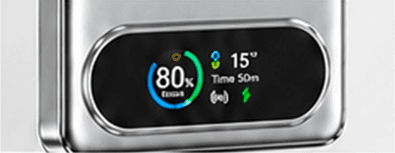
Review the display and controls with first-time users. Is the indication understandable? Does the manual explain charging modes and normal behaviour? Are included cables suitable for the intended use? These details can reduce avoidable customer questions without changing the capacity specification.
Pass-through charging and simultaneous outputs deserve explicit confirmation. If the supplier does not document a mode, do not build your application story around it. Ask whether the proposed use is supported and what restrictions apply.
9. Compare commercial value beyond unit price
Request quotations on an equivalent basis: approved model revision, quantity, accessories, branding, packaging, documentation, inspection arrangements, delivery responsibility, and after-sales process. A lower unit price may exclude work that another quotation includes.
For logistics planning, compare packaged dimensions, gross weight, carton quantities, and the proposed shipping method. Do not substitute net product weight for shipment weight. Discuss the actual battery configuration and route with a qualified logistics provider rather than assuming that one capacity class is automatically straightforward to ship.
There is no universal rule that the smaller-capacity product is the better commercial value. Pricing depends on the complete configuration and commercial terms. Similarly, stocking both classes is useful only if your audience understands the reason for choosing one over the other.
Before expanding a range, define the role of each SKU. One might emphasize compact reserve power while another emphasizes a larger energy reserve. If the only difference customers can see is a capacity number, improve the comparison content before adding more options.
10. Write claims your support team can defend
Your product page should explain the model's verified capacity, dimensions, weight, charging capabilities, intended compatibility, and included accessories. Use conditions where they are necessary to interpret performance. Clear limitations are part of an accurate specification.
Avoid statements such as “charges every phone twice,” “maximum speed with every case,” or “approved by every airline.” These claims combine different devices, conditions, and external requirements into a promise that capacity alone cannot support.
When using numerical examples, label them as examples. Do not move a hypothetical efficiency calculation into a product specification table as though it were a measured result. Likewise, a photograph showing a phone at a particular percentage is not a complete charging-performance report.
Create a short internal answer sheet for sales and support. It should explain the meaning of the capacity rating, the compatibility scope, how performance was assessed, and where to find the approved specification. Consistent answers help customers select the appropriate product before purchase.
11. Use a practical selection scorecard
Turn the comparison into a decision your team can review. List application fit, usable-energy evidence, attached comfort, charging compatibility, input convenience, packaging, documentation, and commercial readiness. Assign importance based on your customer rather than treating every criterion equally.
Record the reason behind each score and link to the sample observation or document. “Good portability” is subjective; “accepted by the review team on the three priority phone-and-case combinations” is more specific, provided that review actually occurred. Do not invent user trials to fill a gap in the assessment.
Finally, review unresolved trade-offs with the people responsible for customer communication. A technically acceptable sample may still need clearer packaging or a different audience position. The final decision should explain who the product is for and the limitations the customer needs to understand.
Frequently asked questions
Is a 10,000mAh magnetic power bank always better?
No. It can provide a larger nominal energy reserve than a 5,000mAh product at the same nominal voltage, but suitability also depends on dimensions, weight, usable output, compatibility, and the application. Some users value compact handling more than additional reserve energy.
Why does delivered capacity differ from the advertised cell capacity?
The declared cell capacity and output measurement may use different voltages and boundaries. Conversion losses and operating conditions also affect delivered energy. Compare watt-hours and test conditions instead of expecting the numerical mAh values to match.
Can I promise two full phone charges from a 10,000mAh model?
Not from the capacity label alone. The phone's battery energy, charging path, operating state, and actual product performance affect the result. Use documented testing for a defined device and communicate its conditions.
Is 5,000mAh the right choice for promotional gifts?
It may suit some projects, but capacity is only one factor. Consider recipient needs, attached handling, branding, packaging, budget, documentation, and the delivery schedule. Evaluate the complete proposed product rather than assuming one capacity fits every campaign.
Does ZONNGOO offer both capacity classes?
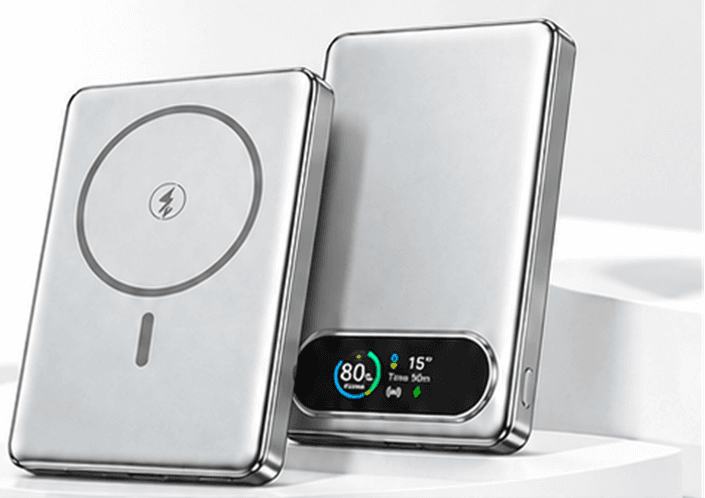
The current WiMag 10MC9 materials describe a 10,000mAh product. This comparison does not establish the availability of a 5,000mAh ZONNGOO model. Ask for the current catalog and confirmed configurations before planning an assortment.
Conclusion
Choose the capacity class that fits the customer and then verify the complete product. A useful comparison combines nominal energy, usable-energy evidence, charging capability, dimensions, handling, recharge requirements, and commercial terms. The best SKU is the one whose real characteristics match the application and whose claims your team can explain accurately.
Planning a magnetic power bank range? Ask ZONNGOO for the current product catalog and specifications. Share your target users, priority phones, sales channel, estimated quantity, and desired position in the market so the discussion can focus on suitable, currently available configurations.