Introduction
A magnetic power bank can look convincing in a product photograph and still be unsuitable for your market. The camera clearance may be wrong for a popular phone, the charging description may be unclear, or the packaging may arrive without the information your distributor requested. These problems become expensive when they are discovered after artwork approval or production.
For an overseas brand, sourcing is therefore more than choosing a capacity and adding a logo. You are buying a defined product configuration, a set of commercial commitments, and the evidence needed to support your own customer communication. A disciplined buying process connects those three things before a purchase order is released.
This checklist is designed for importers, accessory brands, distributors, and promotional-product buyers. It describes practical evaluation steps rather than claiming that any particular supplier or product has already passed them. Your target market, channel, and order configuration determine which checks apply.
Quick answer: To source private label magnetic power banks, define the application, confirm the exact model and charging specifications, evaluate representative samples, review model-specific documentation, approve the branded configuration, and agree on shipment inspection and change control in writing.
1. Start with a buying brief, not a product photograph
The first useful sourcing document is a buying brief. A retail accessory brand may prioritize repeat purchases, packaging consistency, and support materials. A distributor may care more about model continuity and replenishment. A corporate-gift project may put greater weight on presentation, artwork approval, and a fixed delivery date.
Write down the intended sales market, channel, expected users, and typical application. Will customers use the product for short commutes, exhibition days, or longer periods away from a charger? Which phones and cases matter most? An answer such as “compatible with modern phones” is too broad to guide sample evaluation.
Include your preferred capacity, acceptable dimensions and weight, wired and wireless charging requirements, logo treatment, packaging format, estimated quantity, and delivery window. Mark unresolved requirements as questions. Guessing an answer simply to complete a spreadsheet creates an assumption that may later be treated as an approved specification.
Send the same brief to shortlisted suppliers. Comparable inputs make quotations easier to compare and reveal where one proposal includes work that another excludes. Ask each supplier to identify exceptions instead of returning a general statement that everything is possible.
2. Understand what private label actually includes
Private label, OEM, and ODM are used differently across suppliers. The terminology does not tell you whether a quotation covers a printed logo, a new enclosure, a different cell, or a redesigned circuit. Describe the actual changes required and obtain a written response for each one.
| Customization | What to confirm before approval |
|---|---|
| Logo application | Artwork version, placement, size, finish, and durability expectations |
| Retail packaging | Dimensions, print files, inserts, manual, and barcode responsibilities |
| Product colour | Material, colour reference, acceptable variation, and order implications |
| Enclosure modification | Tooling, mechanical fit, sample approval, and tooling ownership |
| Cell or circuit change | Performance impact, document applicability, and re-evaluation requirements |
A cosmetic change does not automatically mean that every existing document covers the finished branded product. Equally, a printed logo should not be confused with a completely new engineering development. Ask the supplier to explain the boundary of the quoted service.
Artwork should have a controlled version number. Specify who checks spelling, regulatory text, importer details where applicable, and translations. A supplier can reproduce approved artwork accurately while the artwork itself still contains an error. Approval responsibilities need to be explicit.
3. Turn charging claims into checkable specifications
Capacity, charging speed, and compatibility answer different questions. Request separate values for cell energy, USB-C input, wired output, wireless output, and supported charging profiles. A connector photograph cannot establish the protocol supported by the electronics inside it.
For wired charging, ask which voltage and current combinations are supported, how the advertised maximum is achieved, and which adapter and cable are required. For wireless charging, ask about the intended receiving devices, alignment requirements, and the conditions under which the claimed output was measured.
Magnetic attachment is not evidence of Qi2 certification. If certification is part of your purchasing requirement, check the exact model in the Wireless Power Consortium product database, and compare the listed identity with the supplier's documents and sample label. Similar product names are not sufficient.
Also clarify combined operating modes. Can wired and wireless outputs run together? Is the total output shared? Is pass-through operation supported and documented? Do not infer these features from the number of ports or from a display animation. Ask for a current specification sheet covering the proposed configuration.
4. Evaluate magnetic fit on representative devices
Magnetic strength is only one part of usability. The power bank must sit correctly on the phone, avoid the camera area, and remain comfortable during normal handling. A product that fits one large phone may interact differently with a smaller model or a case with a raised camera surround.
Prepare a device-and-case list before samples arrive. Check alignment, camera clearance, access to buttons and ports, grip, and stability during ordinary use. Record the exact phone and case combination alongside photographs. These records are more useful than an unsupported statement that the sample “fits iPhone.”
Case materials, thickness, and alignment can affect wireless performance. Apple's wireless charging guidance discusses factors such as positioning and accessories; it should not be treated as a performance certificate for a third-party power bank. Test the combinations your customers are likely to use.
Separate functional compatibility from a charging-speed claim. A device may attach and charge while receiving less power than the advertised maximum. Your sample report should distinguish physical fit, charging operation, and measured performance.
5. Build a sample evaluation plan before samples arrive
A sample is most valuable when everyone knows what it is supposed to demonstrate. Assign an identifier to each unit, photograph its label and ports, and record the supplier's stated configuration. Keep the packaging and accessories together so the full proposal can be reviewed later.
Appearance and basic function
Check finish consistency, assembly gaps, connector alignment, button operation, display readability, and the condition of supplied accessories. Verify charging input and the intended outputs using suitable equipment and competent personnel. Record failures and interruptions rather than repeating a test until only a successful result remains.
Repeatability and limitations
Use consistent devices, cables, adapters, starting conditions, and ambient conditions when comparing samples. Phone battery percentages alone are not a precise energy measurement. Where performance claims matter commercially, agree on a suitable measurement method with a qualified team.
An approved sample is a reference, not proof that every later unit will be identical. Ask whether it represents intended production components and how substitutions are controlled. Keep one approved reference unit and a signed specification or approval record linked to it.
6. Review documentation by model and purpose
Safety evaluation, wireless interoperability, and transport testing serve different purposes. A folder containing several logos or certificates does not establish that the proposed finished product satisfies your requirements. Begin with the exact product identity and work outward to the applicable documents.
For example, UL's overview of UL 2056 testing describes power-bank safety evaluation across several types of hazards. Whether a specific product has been evaluated, and what a report covers, must be established from its own documentation. Do not describe a product as certified merely because a supplier mentions a standard.
For battery transport evidence, request the applicable UN 38.3 test summary and confirm traceability to the battery supplied. PHMSA's test-summary guidance explains the purpose of these summaries. A test summary is not interchangeable with a general product safety certificate.
Review manufacturer and model names, ratings, report dates, laboratory identity, and the scope of evaluation. If names differ across documents, ask for a documented explanation. Never resolve a mismatch by editing a report yourself or requesting that a supplier simply replace the model name on an unrelated document.
7. Approve the branded product as a complete configuration
Once the base model is acceptable, approve the finished commercial configuration. That includes the product, logo, colour, packaging, manual, labels, accessories, and any agreed software or display behaviour. A collection of separate approvals can leave gaps if nobody confirms that they belong to the same order version.
Create an approval pack with dated artwork, specification revision, photographs, and a list of included items. Identify who has authority to approve changes. If an engineering sample differs from the intended production unit, document the difference and resolve it before authorizing the batch.
Changes to cells, circuit boards, materials, or construction may affect performance and the applicability of earlier evidence. Require advance notification of relevant changes and an agreed review process. A supplier's promise to ship an “equivalent” component needs a definition of equivalence and a named person who can accept it.
For repeat orders, confirm the approved revision rather than assuming the last order will automatically be reproduced. This is particularly useful when purchasing is handled by a different colleague or when months have passed between shipments.
8. Make shipment inspection a defined activity
Shipment inspection should answer agreed questions about the goods being shipped. Specify quantity checks, cosmetic expectations, packaging condition, model and batch labels, accessory inclusion, and selected functional checks. Agree on the sampling approach, acceptance criteria, reporting format, and response to discrepancies.
Factory testing and independent shipment inspection can complement each other, but they are not identical. Production records may show what was checked during assembly; a shipment inspection evaluates selected goods from the order. Neither should be presented as a substitute for a specialist laboratory evaluation where one is required.
Ask the report to identify the order, inspection date, sampled units, and carton references. Photographs should connect findings to the actual batch. A generic photograph of a test bench or stacked cartons cannot establish what happened to your shipment.
Agree in advance how failures will be handled: sorting, rework, replacement, additional inspection, or another documented remedy. Discovering that the buyer and supplier have different acceptance criteria after the cartons are sealed makes resolution more difficult.
9. Compare quotations on the same commercial basis
Unit price is only one part of the sourcing decision. Compare the same product revision, quantity, packaging, accessories, customization, inspection arrangement, and delivery responsibility. Ask whether tooling, artwork preparation, samples, or testing are included or charged separately.
Clarify when the lead-time clock starts. It may depend on deposit receipt, artwork approval, sample approval, or availability of a selected component. Request a schedule with milestones rather than a delivery estimate detached from those dependencies.
Discuss warranty handling and defect reporting in practical terms. Who reviews a claim, what evidence is required, and what remedy is available under the contract? Avoid assuming that a familiar warranty phrase automatically describes an operational support process.
Battery logistics also need specialist planning. Confirm the proposed shipment with a qualified forwarder using the actual product and route. IATA's battery information is a useful starting point for understanding why transport requirements need separate attention. Passenger baggage guidance is not a complete commercial cargo shipping plan.
10. Use a written go/no-go decision
Before placing the production order, review open items in one place. The decision should cover sample acceptance, specification identity, document review, artwork, inspection, delivery milestones, and commercial responsibilities. Give every unresolved item an owner and a deadline.
Classify issues by their effect on the order. An undecided outer-carton graphic is different from an unidentified cell or an unsupported charging claim. Do not allow many small completed tasks to hide one critical unanswered question.
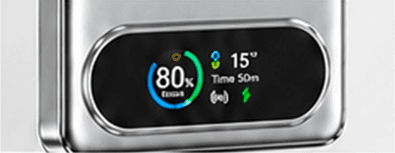
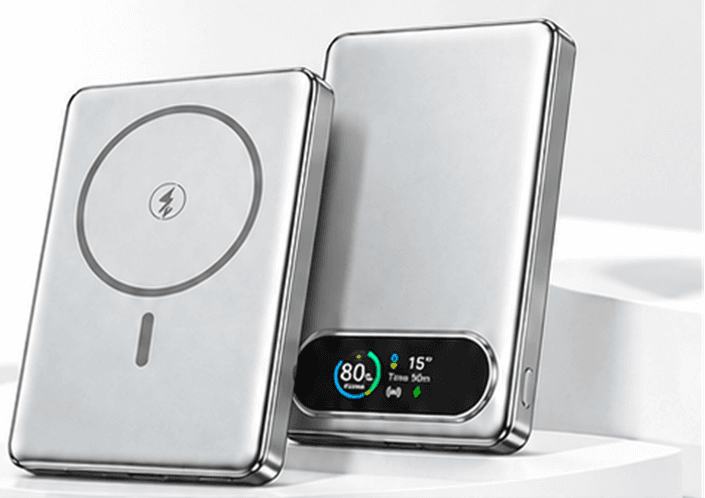
If you are evaluating ZONNGOO's WiMag 10MC9, start by requesting the current model specification and the proposed sample configuration. Existing marketing materials describe a 10,000mAh magnetic product with a display and USB-C, but the approved order specification should determine the final technical and commercial claims.
Keep the decision record with the purchase order. It gives purchasing, sales, quality, and customer support the same reference and makes later repeat orders easier to manage.
Frequently asked questions
What is the minimum order quantity for private label magnetic power banks?
There is no single minimum that applies to every supplier or project. Quantity requirements can depend on the base model, logo process, packaging, colour, and engineering changes. Request a quotation for your intended configuration rather than treating a generic advertised minimum as a complete offer.
Is a factory always a better choice than a trading company?
The commercial role alone does not establish quality or accountability. Identify the contracting party, who controls production, who can provide traceable documentation, and who handles problems. A workshop photograph is not enough to establish those responsibilities or a relationship with another company.
Does magnetic attachment mean a power bank is Qi2 certified?
No. Physical magnetic attachment and certification are separate matters. If Qi2 certification is required, verify the exact product listing and its correspondence with the proposed model.
Should I approve a standard sample or a branded sample?
Use a standard sample to evaluate the base product, then approve the branded configuration before production. The depth of the second approval depends on the changes, but artwork, packaging, included accessories, and specification revision should all be controlled.
What should I send with an initial RFQ?
Send your target market, expected quantity, application, phone compatibility priorities, capacity preference, charging requirements, branding, packaging, and delivery window. Identify which requirements are mandatory and which are open to suggestions.
Conclusion
A reliable sourcing decision follows an evidence chain: customer requirements, a defined specification, representative samples, relevant documentation, a complete approval, and controlled shipment inspection. Each step reduces a different uncertainty. Completing them in order helps you build product claims and customer commitments that your team can actually support.
Ready to discuss a private label project? Send your requirements to ZONNGOO, including your market, estimated quantity, intended devices, and customization needs. Request the current product specification, sample configuration, and quotation before making a final selection.