Quick answer
Before approving a power bank sample for a bulk order, identify the exact model and battery series, agree on the checks and conditions, record the results, and connect the approved sample to a controlled specification revision. Separate appearance approval from charging performance, documentation and packaging approval. A sample that looks good or charges one phone is useful evidence, but it does not establish every advertised capability or guarantee the consistency of a future shipment.
The practical deliverable is an approval record: what was examined, which configuration was supplied, what passed, what remains open, and who may release production. This guide is for brands, distributors and purchasing teams preparing a first order or a revised product. It describes a proposed review workflow, not a claim that ZONNGOO has already performed particular tests for your project.
Introduction
A sample can answer many purchasing questions, provided the questions are specific. Does the connector fit the intended phone case? Is the display readable in ordinary lighting? Does the selected finish match the approved artwork? Can the packaging hold the actual product and accessories without pressing on a cable? These decisions become difficult when everyone uses the word approved to mean something different.
Plan the review before the sample is dispatched. Ask which elements represent production and which are temporary: a prototype housing, blank packaging or a provisional manual may be acceptable for one review stage, but not for final release. A written scope prevents a quick visual confirmation from being mistaken for permission to manufacture an entire order with unresolved details.
1. Fix the model, battery series and revision
Record the complete model reference and the battery category, not just the product photograph. ZONNGOO separates all-solid-state, semi-solid-state lithium and lithium-polymer product series. Similar model names or a shared housing do not make their specifications interchangeable. Keep the sample reference consistent with the quotation, specification sheet and purchase order, including any suffix that distinguishes a variant.
Add the sample identifier, date received, body color, supplied accessories and document revision. Photograph the unit and its label for the approval file. If the supplier proposes a change during review, request a revised record instead of silently replacing the earlier attachment. A clear identity is especially useful when marketing, purchasing and engineering review different samples in different locations.
2. Decide what each sample stage can approve
Distinguish a display mockup, a functional sample and the agreed production reference. A display mockup can help choose a color or layout but may not contain the final charging electronics. A functional sample can demonstrate selected behavior while still using temporary artwork. The production reference should represent the configuration the parties actually intend to supply, with any exceptions explicitly listed.
| Review stage | Useful decision | Limit to record |
|---|---|---|
| Visual mockup | Color, proportions and artwork position | Materials or electronics may be provisional |
| Functional sample | Agreed charging and handling checks | Packaging or finish may remain open |
| Production reference | Final agreed configuration and approval record | Shipment consistency still requires its own controls |
Do not infer a fixed number of sample rounds or a standard schedule from this table. Confirm the sequence, cost, responsibilities and timing for your project with the supplier.
3. Check handling, fit and everyday usability
Review the product with the devices and cases customers are likely to use. For magnetic products, check placement, camera clearance and whether the case permits the intended attachment. For built-in cable products, check connector access, usable reach and cable storage. A photograph of a compatible connector shape cannot replace trying the actual combination specified in the brief.
Inspect buttons, ports, seams, folding parts and indicators in ordinary use. Note sharp edges, loose parts, difficult controls or unclear battery information as observations rather than jumping to a diagnosis. If a stand is included, evaluate the intended orientation on a suitable surface. These checks should be repeatable and should not involve opening, modifying or deliberately damaging a lithium battery product.
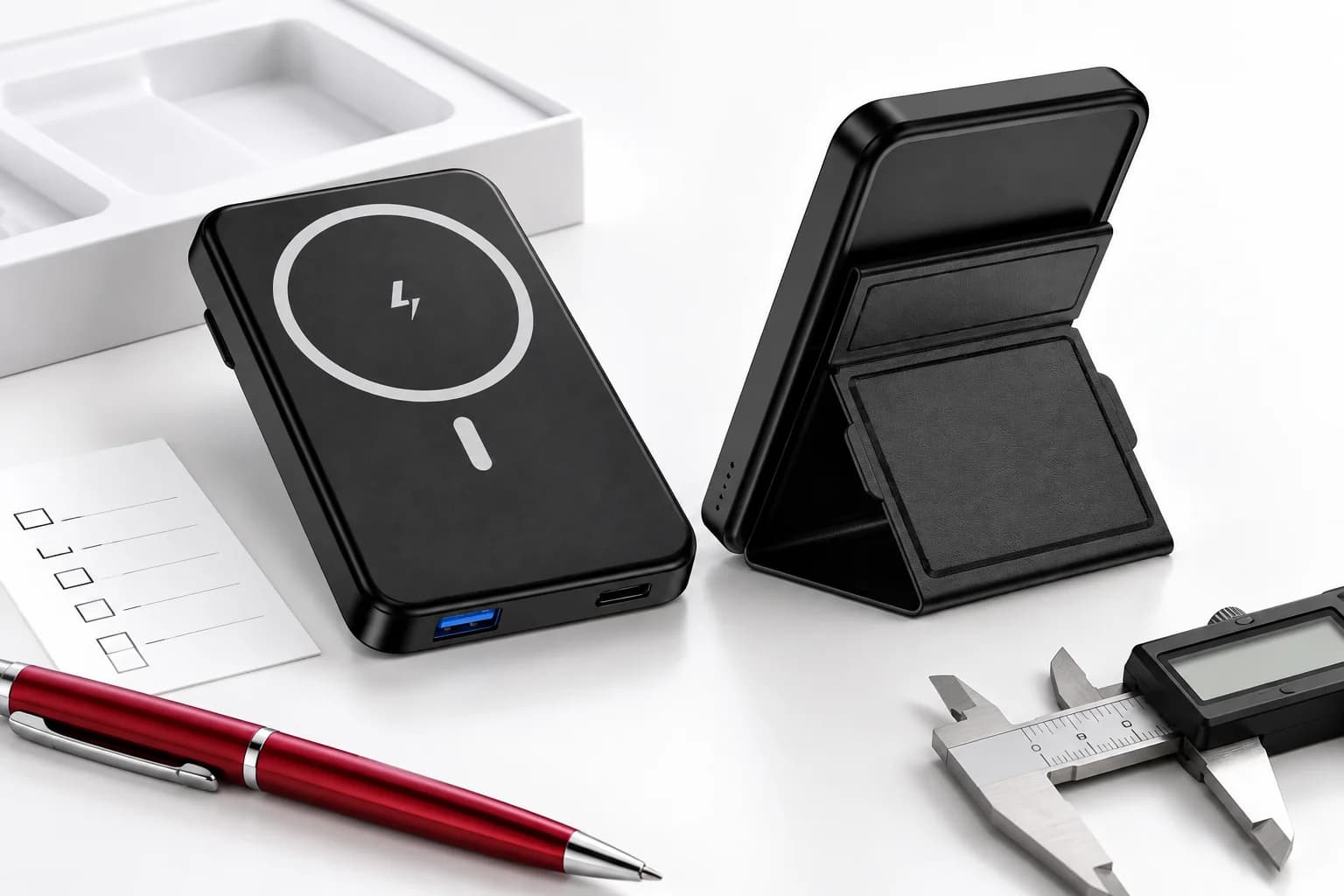
AI-generated sample-review concept; not a photograph of an inspection or evidence of measured dimensions.
4. Agree on charging conditions before comparing results
Specify the phone or other load, its software version where relevant, starting charge level, cable, adapter, connection and ambient conditions. Charging power changes with the receiving device and its charge state, so two readings taken under different conditions are not a fair comparison. Identify whether the question concerns input to the power bank, output from it, or power received by the device.
Ask for the supported profiles and the rating of the exact port or attached cable. A headline maximum does not establish continuous output across a complete charge, every connector or simultaneous use. If multi-device behavior matters, include the precise port combination in the review plan. Agree how results will be recorded and interpreted; an isolated display reading is not a complete performance report.
5. Separate cell capacity from delivered capacity
Record the nominal cell capacity, its voltage basis, and any rated output capacity together with the stated test conditions. The mAh number on a product is not automatically the charge delivered to a phone, because voltage conversion and the charging system affect the result. Avoid calculating a guaranteed number of phone charges from nominal mAh alone.
For a purchasing comparison, ask for the measurement method, output setting, stopping condition and report identity. Compare like with like rather than treating different test setups as equivalent. If energy is stated in watt-hours, verify the underlying voltage and capacity basis. This review does not require the buyer to conduct battery abuse testing; use appropriately qualified support for electrical or safety testing beyond ordinary product evaluation.
6. Verify wireless and certification wording separately
Magnetic attachment, wireless charging power and certification are different statements. Request evidence for the exact version you plan to buy. A magnetic ring, a wireless charging demonstration or a catalog heading does not by itself establish Qi certification or Apple certification. Keep proposed retail claims separate from observed sample behavior until the supporting evidence has been checked.
The Wireless Power Consortium product database identifies certified products and their WPC IDs. Match the record to the relevant product identity rather than a similar photograph. Likewise, the USB-IF logo license information explains conditions for certified USB logo use. These sources describe their respective programs; they do not certify a ZONNGOO sample merely because this article links to them.
7. Review branding on the actual surface
Compare the sample with the approved artwork revision, dimensions, position and color reference. Look at the logo at its real size under ordinary lighting. A screen proof can communicate placement but cannot establish the contrast or appearance of a mark on a particular coating. Confirm which surface and marking method the approval covers, including different body colors if applicable.
Describe any discrepancy precisely: for example, position relative to an agreed edge, incomplete small text or a mismatch against the agreed color reference. Avoid vague instructions such as make it premium. See the logo artwork guide for the file handover. Any adhesion or durability assessment needs an agreed method and acceptance criteria; a casual scratch is not a standardized test.
8. Include the complete pack and instructions
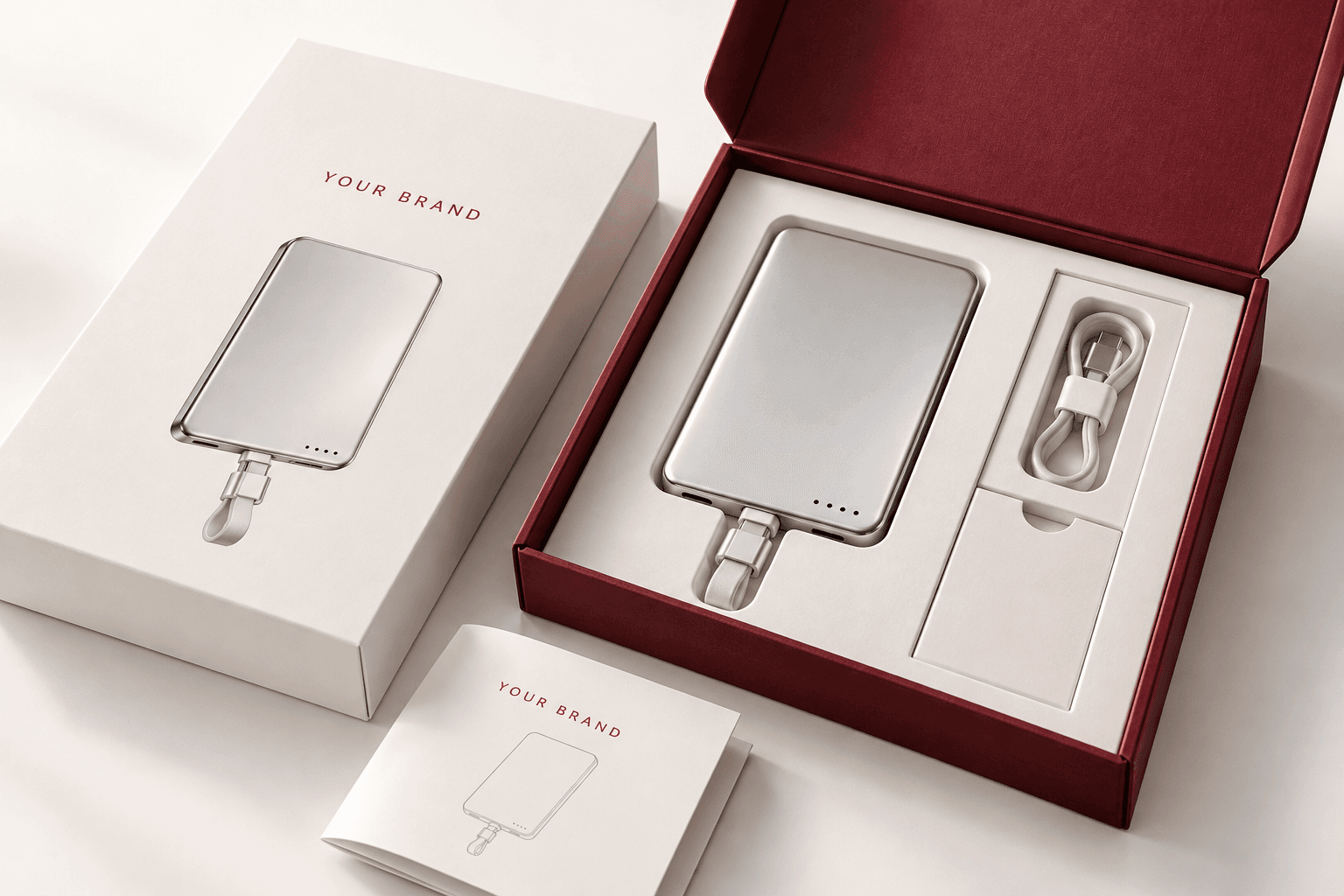
Approve the product together with its intended insert, accessories, manual, labeling and box. Check that the unit fits without obstructing a button or stressing a connector. Confirm accessory quantities and that the written instructions match the actual interfaces. If translated instructions are required, include the target languages and the party responsible for reviewing them in the approval record.
Check that packaging claims match the confirmed specification and supporting documents. A printing sample and a charging sample may have separate identifiers; connect both to the final configuration. The packaging approval checklist covers artwork and pack details in more depth. Transport documentation and shipping arrangements need separate confirmation for the product, route and shipment rather than being inferred from a retail box.
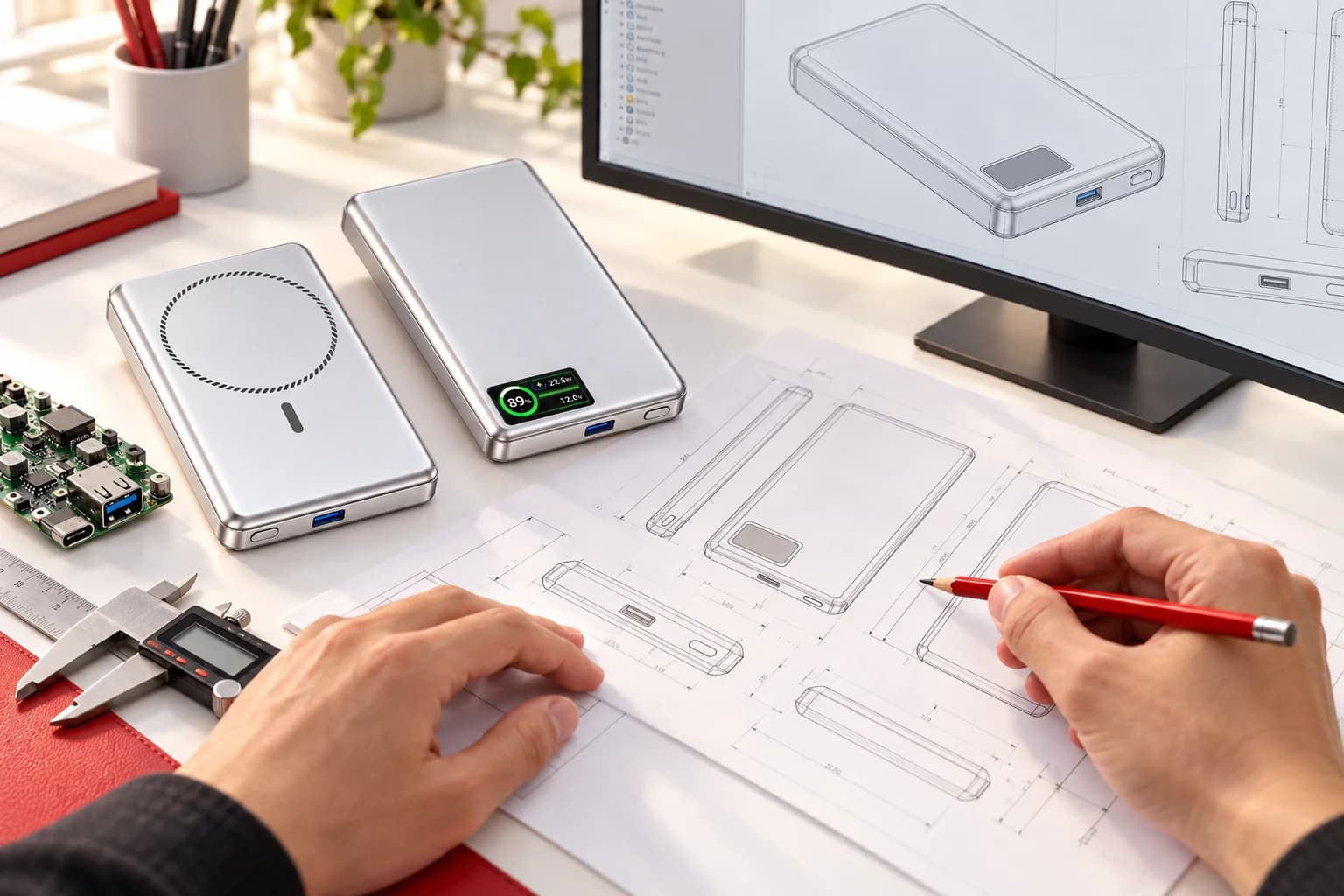
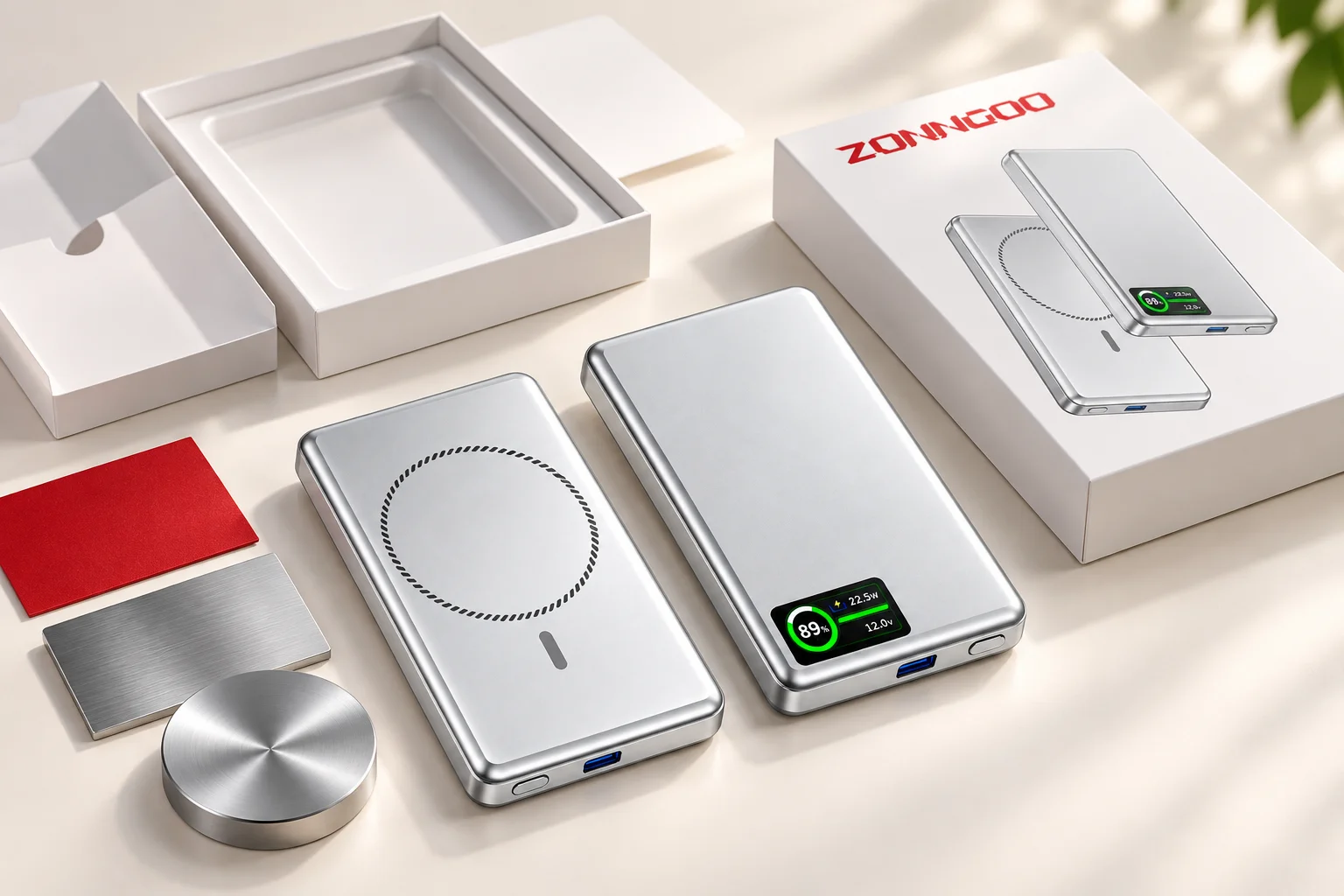
AI-generated design-review illustration; drawings and displayed values are illustrative, not approved engineering records.
9. Record findings without losing open issues
Use a short review table with the sample identifier, requirement, method, observation, status and owner. Status can be approved, revise and resubmit, or pending evidence. Separate a cosmetic preference from a functional problem and from a missing document. This makes the next action clear and avoids approving an unresolved requirement through an ambiguous email reply.
Attach clear photographs where they explain a finding, but keep the written criterion too. If a measurement is involved, record the instrument and conditions appropriate to that check. Do not overwrite the initial observations after receiving a correction. Keep the original result, the supplier response and the verification of the revised sample together, so the history remains understandable to someone joining the project later.
10. Define release and change control
Identify who has authority to approve the sample and what that approval releases. One person may approve artwork while another reviews technical documents. The final production release should reference the agreed specification, artwork, pack and remaining exceptions. If anything remains provisional, state whether production must wait or whether a clearly defined partial activity may proceed.
Keep an agreed reference sample or equivalent controlled record accessible to the relevant parties. Before accepting substitutions in materials, electronics, color, packaging or accessories, ask which approvals and documents are affected. A new component is not automatically equivalent because the housing looks unchanged. For an OEM or ODM project, discuss this process through the manufacturing enquiry page rather than assuming an informal chat changes the purchase specification.
11. Keep shipment review separate from sample approval
An approved sample is a reference for the order, not a statistical demonstration of all units in a later batch. Agree the scope of shipment inspection, sampling approach, acceptance criteria and reporting separately. Confirm who performs the review, when it happens, and how deviations are handled. Do not invent an inspection level or acceptance number without understanding the contract and product risk.
For the next step, send ZONNGOO your intended devices, destination market, selected battery series, model, quantity and customization requirements. Ask for the current specification and a proposed sample confirmation plan. Sample availability, fees, timing, documentation and inspection services need project-specific confirmation. This creates a usable enquiry without promising a universal process or a delivery date that has not been agreed.
Frequently asked questions
Is one working sample enough to approve a bulk order?
It can support the decisions included in its review scope, but it does not establish every capability or future batch consistency. Record the configuration, checks, limitations and production release criteria, and agree shipment controls separately.
Can I approve a product from photos alone?
Photos help review appearance and artwork, but they cannot establish physical fit, charging behavior or material performance. Identify which decisions can use a digital proof and which require an actual sample or qualified test evidence.
Should I compare charging speed using two different phones?
Different phones, charge levels, cables and conditions can change the result. Use an agreed device and setup for comparison, and distinguish the power bank's rated capability from what a receiving device accepts during a particular session.
Does a magnetic power bank automatically have Qi certification?
No. Magnetic attachment and certification are separate. Request the relevant certification identity and verify it against the appropriate official database before using certified wording in your sales materials.
What should happen if the sample changes after approval?
Record the proposed change, identify affected specifications and artwork, and decide what must be reviewed again. Keep revision identifiers and obtain the required approval before releasing the changed configuration.
How do I start a sample enquiry with ZONNGOO?
Send the model and battery series, devices, market, quantity, branding and packaging requirements to info@zonngoopower.com. Ask which sample configuration is available and agree the review scope, commercial terms and next steps before proceeding.
Conclusion
Good sample approval turns an attractive object into a clear purchasing reference. Identify the configuration, define ordinary-use and technical checks, verify claims independently, and connect appearance, packaging and documentation to the release record. Keep unresolved items visible and treat later changes explicitly. With that foundation, the buyer and supplier can discuss a bulk order using the same requirements instead of relying on a broad statement that the sample looks fine.