Quick Answer
A power bank with an AC plug combines portable battery storage with a mains input in one housing. Before buying, confirm its input rating, destination plug, battery-mode output and wall-powered operating modes separately. Folding pins do not establish worldwide compatibility. Ask for the exact configuration, instructions and supporting documentation before approving a retail or private-label product.
Introduction
A power bank with an AC plug can reduce the separate charging equipment you carry. However, its two roles need separate checks. This guide helps you compare wall charging, portable output, socket fit and purchasing evidence. It also explains when a separate charger and power bank remain more practical.
1. Identify What The AC Plug Actually Does
You should establish whether the plug supplies mains input, rather than assuming the product provides an AC outlet.
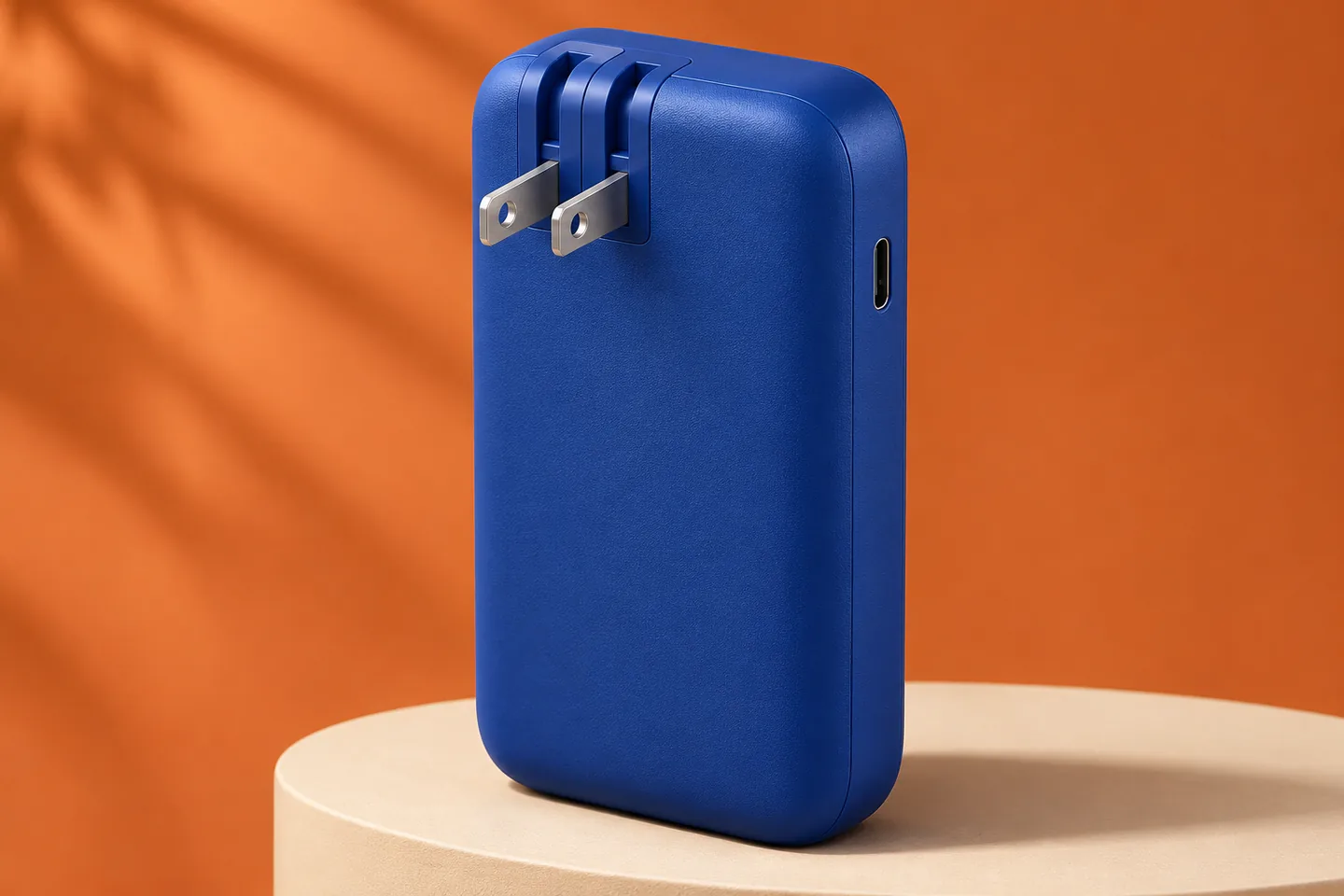
An integrated plug commonly lets a hybrid product recharge from a suitable wall socket. Its portable outputs may still be USB connections. That differs from a battery system with an inverter and an AC receptacle. Do not promise customers they can power a mains appliance merely because the product has metal pins.
Ask the supplier to describe each supported mode in plain language. Separate charging the internal battery, powering an attached device and doing both together. Some products may support these tasks differently. A photograph of deployed pins does not answer those operating questions.
Use the actual manual and approved specification to define the product category. If a listing says only charger, verify that internal battery storage exists. If it says power bank, verify how mains charging works. The useful question is which equipment the product can replace in your customer’s actual kit.
2. Read The Mains Input Label Before Travel
You should match the documented AC input voltage and frequency to the intended electrical supply.
Read the input line on the product and compare it with the current specification. Keep voltage, frequency and any input-current rating together. Do not borrow a familiar input range from another charger. A compact body, folding plug or travel-themed name does not establish a broad operating range.
Electrical Safety First advises travelers to check socket type, voltage and frequency. It also explains why an appliance’s voltage rating matters. Physical plug adaptation does not establish electrical suitability. Follow the product instructions and destination requirements rather than guessing from the pins.
For example, a hypothetical label stating 100–240V, 50/60Hz describes that fictional product’s input conditions. It does not establish any ZONNGOO model’s rating. Nor does it mean every socket, adapter or operating environment is suitable. Request a clear label image before choosing a market-specific version or publishing international-use wording.
3. Specify The Destination Plug And Supplied Version
You should order the exact plug configuration intended for your destination market and approved product design.
Two similar-looking products can have different pins, cases or removable modules. Ask whether the plug is fixed, folding or supplied through a documented interchangeable system. Identify the complete version, not simply a regional nickname. Record the plug drawing or approved reference alongside the order specification.
Do not assume an adapter shown in a concept image belongs to the supplied package. Confirm its manufacturer, rating and permitted use when an accessory is proposed. A generic travel adapter is not evidence of compatibility with every hybrid product. Avoid stacking adapters or forcing a connector into a socket.
If you supply several markets, consider separate stock codes for genuinely different configurations. Match each code to its label, manual and packaging. This makes receiving inspection and customer support less ambiguous. A photograph should show the version the customer receives, rather than a visually similar sample from another market.
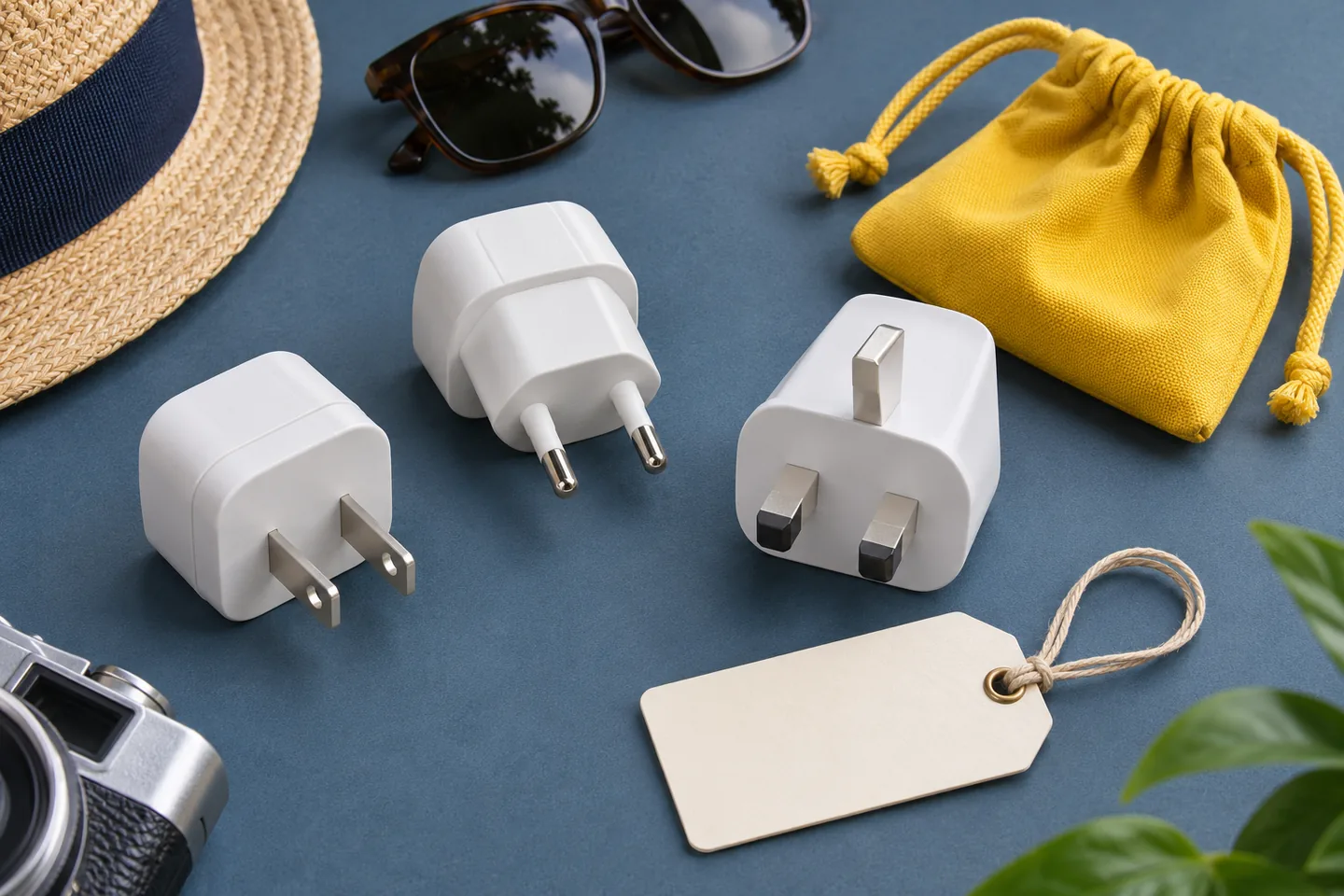
AI-generated plug-selection concept; these adapters are not a supplied ZONNGOO set or evidence of product compatibility.
4. Compare Wall Mode And Battery Mode Separately
You should request output specifications for each supported operating mode rather than relying on one headline wattage.
A hybrid product may have different limits when connected to mains and when operating from its battery. Do not assume either equality or a particular difference. Ask for the documented output table, including voltage, current, protocol support and shared-port limits. Confirm which connector each rating describes.
| Operating Situation | Information To Request | Approval Question |
|---|---|---|
| Internal battery charging from AC | Input conditions and recharge method | Is this mode documented for the supplied version? |
| Device charging while plugged in | Output profiles and power allocation | Does the required device accept this output? |
| Portable battery operation | Battery-mode output and usable-energy conditions | Does it meet the portable use objective? |
| Two devices connected | Shared-output table and connection behavior | Does the intended pairing remain suitable? |
| Mains disconnected during use | Supported transition behavior | Is a restart or interruption acceptable? |
| Recharge through a USB input | Supported port, adapter and cable | Is alternative recharging actually available? |
If customers expect simultaneous charging, obtain explicit confirmation for that arrangement. Do not describe the product as an uninterrupted power supply without appropriate evidence. Our pass-through charging guide explains that separate issue. The hybrid format alone does not settle it.
5. Judge Portable Capacity Independently Of Charger Power
You should evaluate stored energy and portable output separately from the wall-charger power rating.
Watts describe power, while watt-hours describe energy. The EIA explanation of electrical measurement distinguishes those quantities. A powerful wall mode does not by itself prove substantial portable capacity. Nor does a large cell-capacity number establish the power available to a connected device.
Ask for cell capacity, its voltage basis and the definition of rated output capacity. Request the relevant delivery conditions instead of comparing unexplained mAh figures. Our capacity-label guide explains those boundaries. Do not convert a headline directly into a guaranteed number of phone or laptop recharges.
Define whether your customer needs occasional top-ups or sustained portable operation. Then check the corresponding output and energy evidence. A hybrid can simplify a bag while still being unsuitable for a particular device. Keep its battery size, mass and supported charging modes within the same comparison sheet.
6. Check Socket Fit And Physical Convenience
You should assess the product’s physical arrangement in the intended socket environment without treating fit as a safety certification.
A wall-mounted body may block adjacent outlets or be awkward behind furniture. A folding plug can reduce exposed pins during storage, but does not answer socket clearance questions. Record dimensions with pins deployed and folded. Include cable exit direction and access to the USB ports.
Inspect an approved sample using a suitable socket arrangement and the manufacturer’s instructions. Do not force a tight plug or keep using a loose, damaged connection. Ireland’s CCPC provides charger buying and use guidance. It warns against continuing with a charger that is difficult to insert.
For purchasing, distinguish a convenience review from formal electrical assessment. Checking adjacent-socket access cannot validate insulation, internal construction or compliance. Ask appropriately qualified parties to review applicable requirements. Do not open the housing or improvise live electrical tests to compensate for missing supplier evidence.
7. Follow Operating Conditions Instead Of Assuming Coolness
You should use the documented environment and handling instructions for every approved operating mode.
Charging electronics and batteries can generate heat. Body size or a technology label cannot establish acceptable temperatures for a particular design. Request its operating limits, ventilation instructions and restrictions on combined operation. Do not invent a temperature threshold or treat touch alone as a complete assessment.
Keep the product uncovered and follow its instructions about placement. Do not operate it inside a closed pouch merely because that pouch stores it neatly. Separate carrying arrangements from charging arrangements. If the product shows damage, unusual odor or other concerning behavior, stop using it and follow support guidance.
CCPC’s charger guidance emphasizes following instructions and avoiding covered charging or flammable surfaces. That general advice is not a test result for any ZONNGOO model. Buyers should request documented conditions for the actual design. A sales photograph should not show a use arrangement prohibited by the manual.
8. Review Samples In Both Roles
You should evaluate the candidate as both a mains-powered product and a portable battery before approval.
Start with the exact model, plug version, revision, supplied cable and manual. Record which devices you connect and their accepted charging requirements. Confirm documented modes before attempting them. Include battery-only output, permitted wall-powered output and any explicitly supported simultaneous operation in the review plan.
Observe device recognition, port access, connection stability and any operating messages. Record starting battery levels and the agreed workload. If transitions matter, define the acceptable result before evaluation. Our sample confirmation page describes the broader approval stage. These are proposed purchasing checks, not existing factory test results.
Keep product verification distinct from certification review. Functional observations cannot prove all electrical requirements have been met. Use a qualified assessment route where needed. Keep the approved sample identifiable. Request review before production when plug construction, battery, charging circuitry or cable configuration changes.
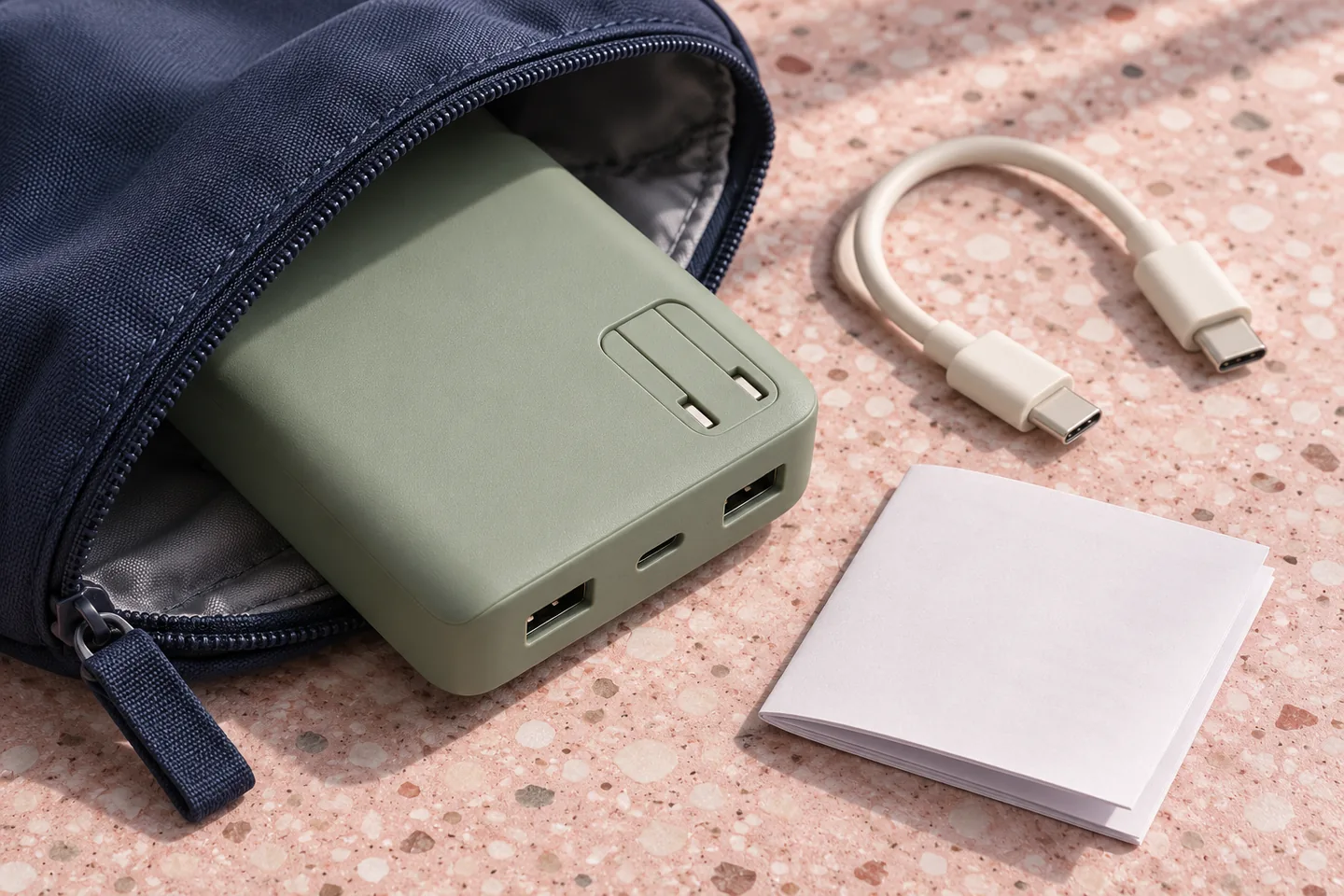
AI-generated carrying concept; not an exact ZONNGOO product, supplied package or permission to charge inside a pouch.
9. Request Evidence For The Exact Market Configuration
You should match supporting documents to the complete product and destination, rather than collecting unrelated logos.
Request the current specification, rating-label artwork, instructions and relevant documentation for the proposed configuration. Check model identifiers, plug version and any stated scope. A report for another housing or component may not support the final product. Ask the responsible supplier or assessment provider to clarify the relationship.
USB-IF explains that a certified cable does not certify attached products. Apply that distinction when reviewing accessory evidence. Likewise, a claim about battery cells does not automatically establish the suitability of the mains-powered assembly. Keep each document tied to the feature or requirement it actually covers.
Avoid printing a certification mark merely because it appears on another product image. Confirm authorization and applicable market requirements before approving artwork. This guide does not determine a complete legal compliance route. Your importer and qualified advisors should review the exact product, intended claims and destination requirements.
10. Decide Whether Integration Helps Your Customers
You should choose the hybrid format only when its combined convenience outweighs the limits of the particular configuration.
It may suit customers who want fewer separate items and have suitable sockets readily available. However, a separate charger can offer more flexible placement or replacement. A separate bank may better match a specific portable-energy objective. Compare actual candidates rather than assuming integration always improves the kit.
Consider what happens if one function is unavailable or unsuitable. Customers should understand the approved alternatives, rather than improvising charging methods. Compare total kit mass, dimensions, included accessories and replacement arrangements. Do not promise lower cost without a quotation for equivalent requirements.
ZONNGOO’s product page lists power banks with AC plug as availability on request. It asks for destination, plug type, charging needs and quantity. It does not establish a named hybrid model, stock, input range or certification. Discuss OEM/ODM requirements against current availability before making a launch commitment.
11. Prepare A Clear Hybrid-Product Inquiry
You should send destination, plug configuration and both operating objectives when requesting a recommendation or quotation.
List target devices, portable capacity needs, expected wall-powered output and any simultaneous-charging requirement. State whether USB recharging is required as an alternative. Include market, quantity, branding and package contents. Make clear which accessories are essential rather than optional illustrations.
Ask for current availability, mode-specific output tables, the input label and supporting documents. Request dimensions in storage and operating positions. Agree on samples and acceptance conditions before approving a branded version. Keep artwork consistent with the supplied configuration, including the manual and plug shown in photographs.
Use one next step: contact ZONNGOO with this brief. A specific inquiry makes comparisons more useful than asking only for the largest wattage. Approve what the evidence supports, and leave unconfirmed conditions out of retail claims until they are resolved.
FAQ
Does An AC Plug Mean The Bank Has An AC Outlet?
No. A plug can be an input for recharging the internal battery. It does not establish an inverter or mains output receptacle. Confirm the actual functions before connecting appliances.
Are Folding-Plug Power Banks Suitable Worldwide?
Not automatically. Check input voltage, frequency, plug configuration and destination requirements. Folding pins describe storage construction. They do not establish universal electrical or socket compatibility.
Will Wall Mode And Battery Mode Have Equal Output?
Do not assume that. Request both output tables and the supported profiles for each connector. Verify your intended devices and any shared-output limits in the relevant mode.
Can It Charge A Phone And Itself Together?
Only if that arrangement is explicitly supported for the exact model. Confirm allocation and operating conditions. Simultaneous charging does not establish uninterrupted operation when mains power is removed.
Does A Higher Wattage Mean More Portable Recharges?
No. Power and stored energy describe different things. You need capacity definitions, voltage and delivered-energy conditions. Device use during charging also affects the result. Avoid fixed recharge promises without evidence.
What Should I Request Before A Private-Label Order?
Request the exact model and plug version, input label, mode-specific profiles, instructions and relevant market documents. Agree on sample review and package contents. Confirm current availability before approving launch claims.
Conclusion
Choose a power bank with an AC plug by checking both its mains and portable roles. Match the input, plug, output modes and documented conditions to your customers. Compare the complete kit, then request the exact configuration and supporting evidence before approval.