Quick Answer
Choose a wired power bank when your priority is a documented cable connection and flexibility across compatible devices. Choose wireless when easy placement or attachment matters and your phone supports the required charging method. Neither format guarantees a particular speed or recharge count. Compare the exact phone, output mode, case, cable and operating conditions before selecting a product.
Introduction
Choosing wired vs wireless power banks depends on your device use, beyond whether you carry a cable. You need compatible charging first. This guide compares connection, placement, speed claims and portable energy. It also helps buyers define a useful sample check and retail bundle.
1. Start With The Phone You Actually Use
You should confirm the device’s supported charging methods before comparing wired and wireless convenience.
Find the exact phone model and its manufacturer’s charging guidance. A USB-C socket does not establish every fast-charge protocol. Likewise, a magnetic case does not add a wireless receiving function to a phone. Record accepted methods separately from the accessories that physically attach to it.
Check other devices in your kit too. A tablet, camera or earbud case can have different requirements from your phone. Wireless support is device-specific; appearance alone does not establish it. A wired option also needs the right connector, suitable cable and compatible output.
For retail purchasing, list target models rather than saying all smartphones. Decide whether the product mainly serves one phone family or a mixed-device audience. That decision affects accessories, instructions and customer questions. It also prevents a simple convenience claim from becoming an unsupported compatibility promise.
2. Understand What Changes At The Connection
You should separate cable delivery, wireless transfer and magnetic attachment when reading product descriptions.
With wired charging, a cable connects the power bank output to the device input. With wireless charging, the compatible device receives power through the supported wireless arrangement. Magnets can help physical positioning, but attachment itself does not prove charging performance. A product may offer both wired and wireless outputs.
Apple’s wireless charging guidance describes magnetic induction and recommended positioning for iPhone. That explains the transfer method without certifying any ZONNGOO model. Keep the bank’s own documented instructions beside your phone’s guidance. Do not assume every magnetic accessory uses the same charging implementation.
Also distinguish wireless output from recharging the bank itself. A product that charges your phone wirelessly may recharge through a cable. Ask which port is an input and which functions are outputs. A cable-free phone connection does not mean the complete charging system never needs cables.
3. Choose Wired For A Flexible Physical Arrangement
You should consider wired charging when separating the phone from the bank makes your intended activity easier.
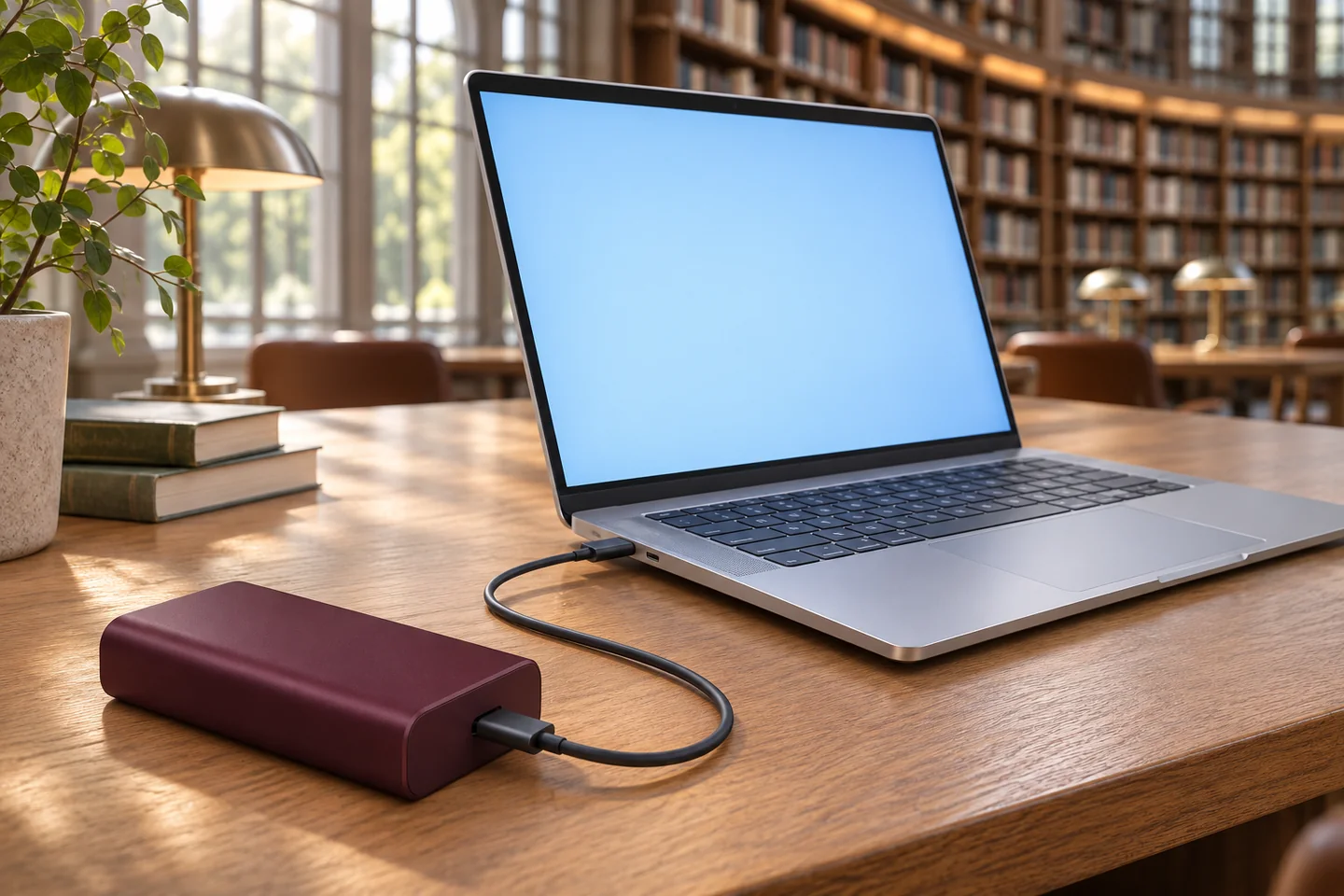
A suitable cable can let you place the bank beside the phone rather than behind it. That can help when the phone sits on a stand or uses accessories occupying its rear surface. Check that the cable reaches without pulling against either connector. More length is not automatically more useful in a compact kit.
Confirm cable capabilities instead of choosing by thickness or color. USB-IF explains that cables have different capabilities. A certified cable does not extend the capabilities or certification of connected products. Match the cable to the documented power path and target device.
Wired use still introduces handling decisions. A cable can catch on nearby objects, and damaged connectors need attention. Follow the instructions and avoid strain. For buyers, specify whether the cable is included, built in or supplied separately. Evaluate the actual arrangement customers will receive, not an ideal accessory absent from the box.
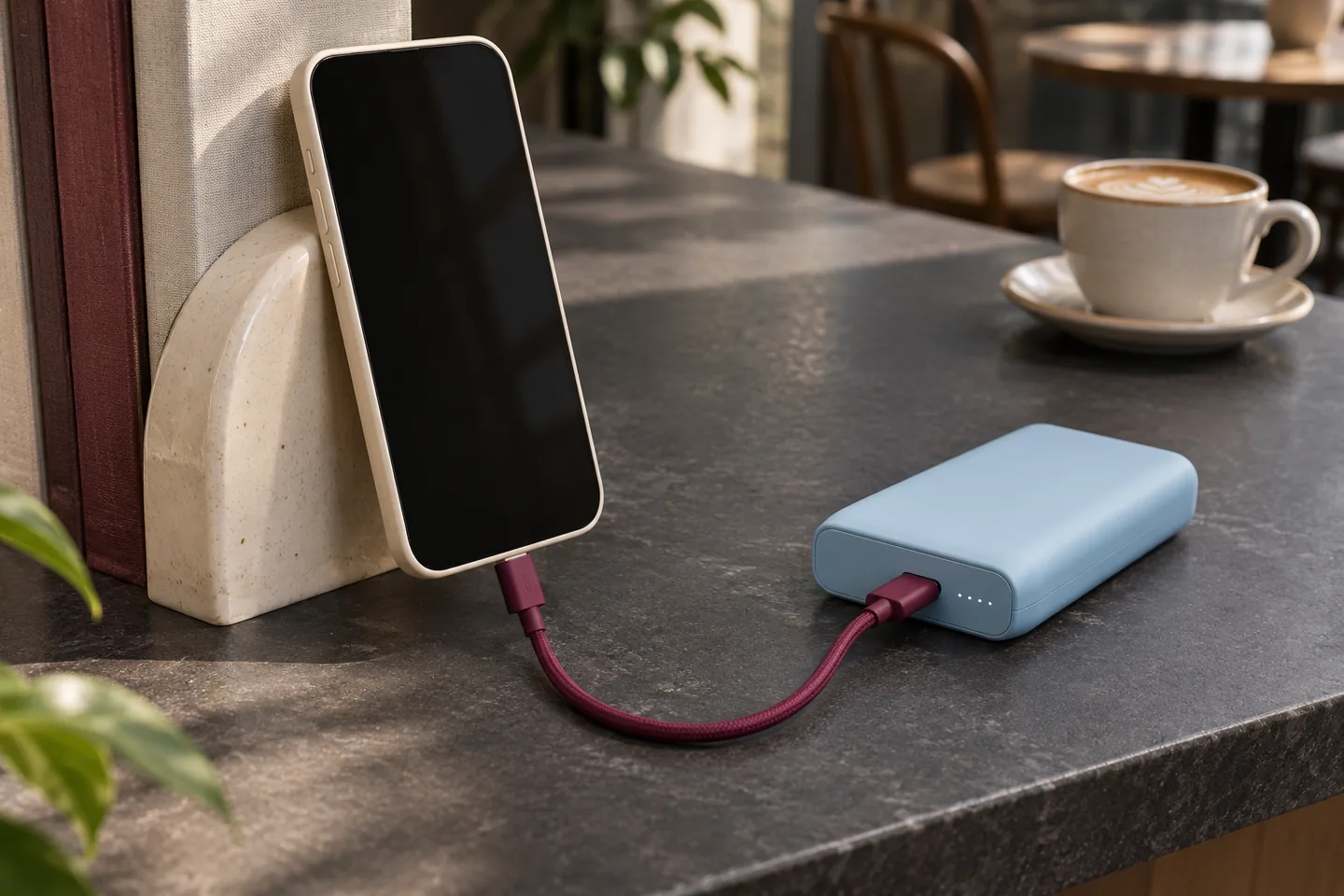
AI-generated wired-use concept; not an exact ZONNGOO product, supplied bundle or measured charging result.
4. Choose Wireless For Placement Convenience
You should consider wireless when supported placement or attachment makes frequent phone top-ups easier.
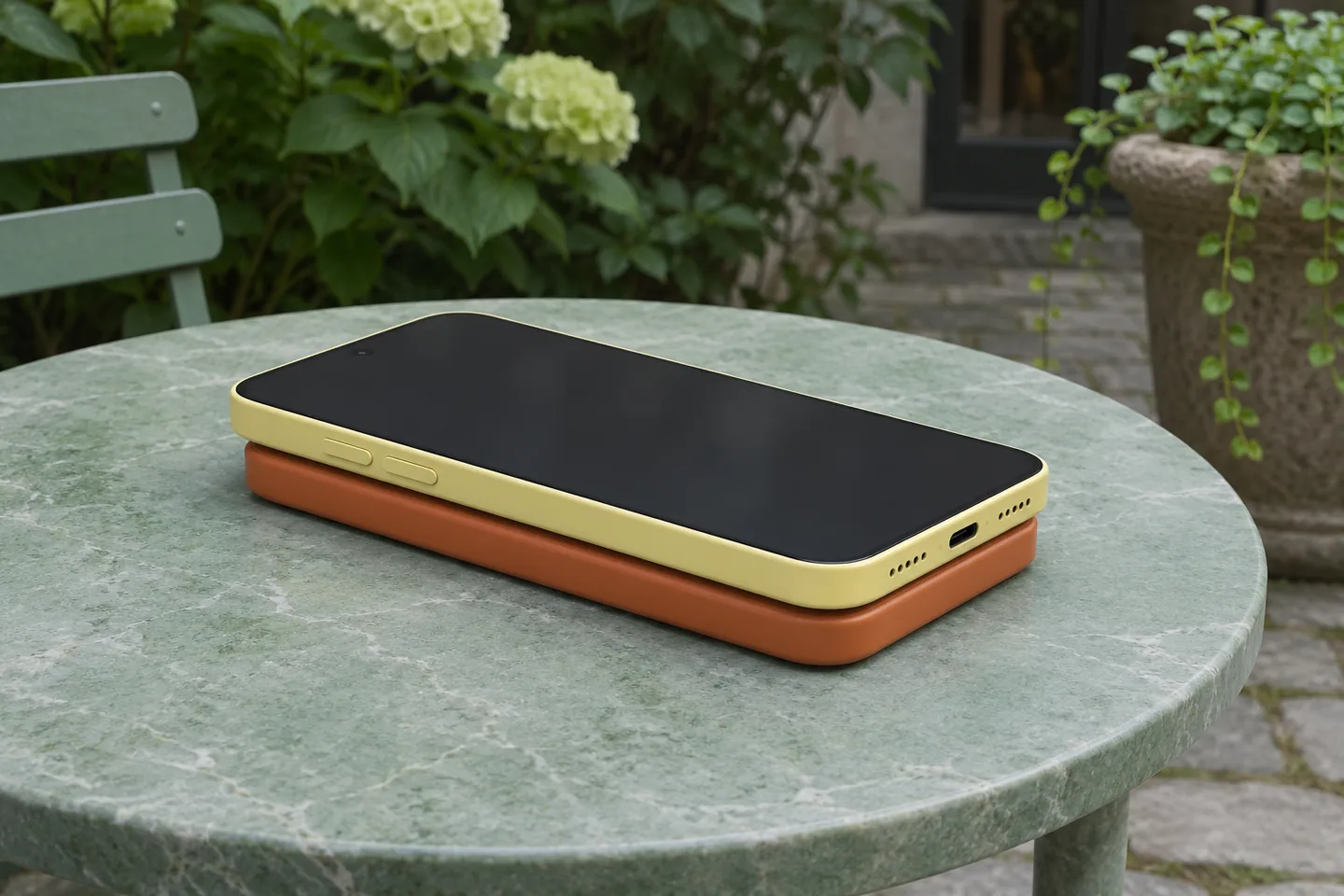
Removing the cable connection at the phone can simplify setting it down or carrying a compatible attached bank. However, you still need the charging surfaces correctly positioned. Check the instructions for activation, alignment and any indicators. Physical attachment and a visible charging icon answer different questions.
A case, grip or raised camera surround can affect the arrangement. Do not assume a stronger magnetic hold fixes a gap or unsupported case. Our phone-case compatibility guide explains those checks in detail. Include the customer’s actual case when deciding whether convenience survives everyday use.
Compare the combined thickness and handling, not the bank alone. An attached bank changes what you hold. A tabletop arrangement needs stability and suitable placement. Keep cards and other inappropriate objects away from the transfer area according to instructions. Wireless convenience depends on a workable whole setup, not simply removing a wire.
5. Compare Charging Speed Under Matching Conditions
You should compare supported modes and measured outcomes rather than assuming one format always charges faster.
Maximum output is a ceiling under stated conditions, not a constant delivery rate. Your phone’s accepted method, battery level, temperature and ongoing work can affect the result. A wireless maximum and a USB maximum may describe different operating paths. Do not add them or treat them as interchangeable promises.
| Your Priority | Wired Check | Wireless Check |
|---|---|---|
| Compatible connection | Input port, protocol and cable | Receiver support and charging arrangement |
| Convenient handling | Cable length, routing and connector access | Placement, case fit and combined thickness |
| Faster top-up objective | Accepted profile and observed charge progress | Supported mode and observed charge progress |
| Longer portable use | Delivered energy under stated output conditions | Delivered energy for the stated wireless setup |
| More than one device | Actual shared-port limits | Simultaneous wired/wireless support and allocation |
| Retail approval | Supplied cable and documented claims | Exact product certification evidence and instructions |
Agree on starting levels, task and observation period before comparing candidates. Use the same phone where comparison requires it. Keep results tied to the configuration tested. A short demonstration does not establish universal performance, battery health or a guaranteed charging time.
6. Compare Useful Energy Without Inventing Efficiency
You should request mode-specific energy evidence instead of assigning a universal efficiency difference to wired and wireless charging.
Both charging paths involve real components and operating limits. Wireless transfer also depends on the coupling arrangement. However, a general explanation cannot tell you the delivered energy of a particular bank and phone. Do not print a fixed percentage advantage without suitable evidence for that comparison.
Cell capacity describes the internal battery, not automatically the energy stored in your phone. Rated output capacity also needs its voltage, mode and test conditions. Our capacity-label guide explains why those boundaries matter. The same headline mAh does not establish identical useful charging across different arrangements.
If longer use away from sockets is your priority, define the device and workload first. Ask how delivered energy was assessed for the intended mode. Keep phone operation during charging separate from battery gain. A power bank can supply energy while the phone also consumes it. Avoid a fixed recharge-count claim based only on dividing mAh figures.
7. Treat Temperature As A Condition To Check
You should follow both devices’ operating instructions and record charging behavior under a representative environment.
Neither wired nor wireless labeling removes thermal limits. Avoid declaring one format always cool or inherently harmless. Check placement, ambient conditions and restrictions in the manuals. Do not operate a setup contrary to its instructions merely to obtain a favorable comparison.
Apple notes that iPhone charging can be affected by temperature in its wireless guidance. That is phone-specific guidance, not a temperature test for a power bank. Record any charging pause or warning rather than hiding it. Stop using damaged equipment and seek appropriate support for concerning behavior.
For purchasing, use comparable conditions and a relevant workload. A phone recording video can behave differently from an idle phone. A case or positioning change may also alter the complete setup. Do not infer lifetime battery damage or guaranteed battery protection from a brief sample observation. Those claims need different evidence.
8. Verify Qi And Magnetic Claims Separately
You should verify exact-product certification before using Qi or Qi2 certification wording in retail material.
The Wireless Power Consortium explains how to check Qi Certified products. It recommends matching the certificate and database record to the actual product. A generic compatibility phrase or printed logo alone is insufficient evidence. Check brand, product name, model identifier and visual match.
Magnetic attachment, wireless power ratings and certification describe different claims. Do not translate magnetic into Qi2 Certified or Apple-certified MagSafe. Ask for supporting authorization when such wording is proposed. This article does not establish certification for any ZONNGOO model.
Keep the supplied configuration and approved claims together. A component description cannot automatically substantiate every claim about a finished branded product. If appearance, branding or construction changes, ask what review is required before repeating certification language. Never promise absolute safety or universal device support from a standards reference.
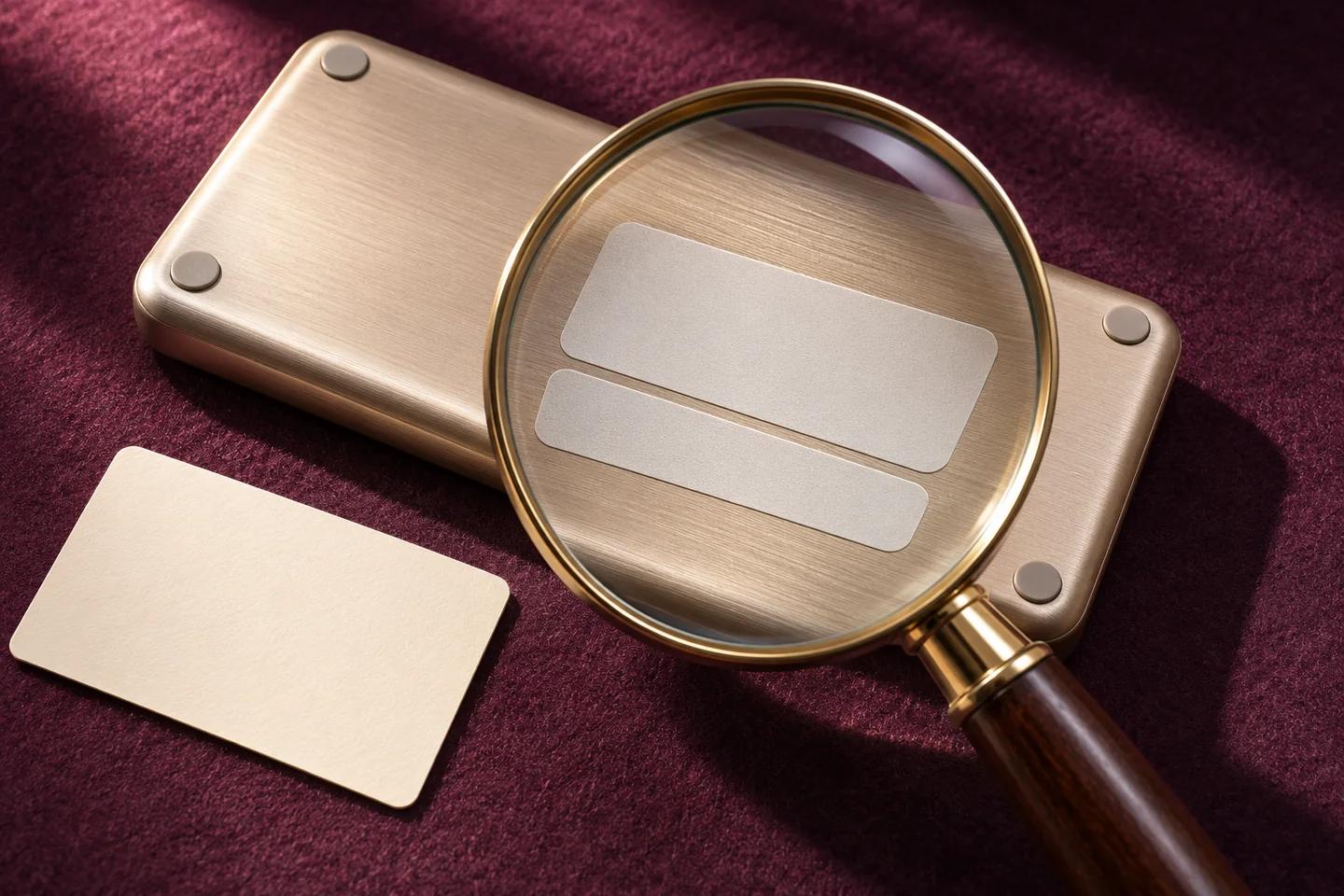
AI-generated selection concept; no actual product specification, certification or comparison test is represented.
9. Read A Dual-Mode Product Listing Carefully
You can shortlist a dual-mode product while keeping each output and unconfirmed condition separate.
ZONNGOO’s 5MC29 listing describes a lithium-polymer magnetic power bank with 5000mAh cell capacity. It lists USB-C cable output up to 20W and wireless output up to 15W. Those are mode-specific listing figures. They do not guarantee that every phone receives either maximum.
The listing gives 2900mAh rated capacity with voltage and test conditions still to be confirmed. Do not infer an exact number of wired or wireless phone recharges. Ask which phones support each mode and what current specification applies. Confirm the cable arrangement and connector behavior on a sample.
The listed input reaches 18W, which describes recharging the bank rather than its maximum phone output. Do not confuse that with the 20W output figure. Nor does the wireless list establish Qi, Qi2 or MagSafe certification. Request exact-product evidence before adding those claims to a product page or package.
10. Approve A Realistic Wired And Wireless Sample Plan
You should evaluate the chosen connection with the actual phone, accessories and intended activity before approving a bundle.
Record model, software version, case, bank revision and cable. Define starting charge levels and the task being performed. Test wired and wireless modes separately first, following supported instructions. If using both outputs simultaneously matters, obtain the allocation rules before adding that condition.
Record recognition, interruptions, handling and battery trend over the agreed period. Separate user convenience observations from electrical measurements. If instruments are used, document their method and measurement boundary. Keep unsuccessful arrangements in the record, rather than reporting only the most flattering setup.
Our sample confirmation page describes the wider review stage. These recommendations are proposed purchasing checks, not claims of existing ZONNGOO test results. Agree on acceptance criteria before ordering. Review changes to the case, included cable or product revision when those changes affect the approved configuration.
11. Build The Offer Around One Clear Customer Need
You should choose the format and package around a specific use objective instead of promising every charging benefit.
For a mixed-device audience, a documented wired path may be the central requirement. For frequent compatible-phone top-ups, wireless placement may deserve priority. A dual-mode product can offer a choice, but needs clear instructions for each mode. More features are useful only when customers understand their limits.
Discuss OEM/ODM requirements using current specifications and the exact target devices. Specify included cable, desired case compatibility, market, quantity and branding. Keep photographs and packaging consistent with the supplied configuration. Do not claim a custom logo changes charging capability.
Browse the product range, then contact ZONNGOO with your priority and device list. Request current outputs, supporting evidence and an appropriate sample. Compare the complete offer, including accessories and approval conditions. Avoid price or performance promises before the relevant specification and quotation are confirmed.
FAQ
Are Wired Power Banks Always Faster Than Wireless Ones?
No universal speed ranking follows from the format alone. Compare the phone’s accepted modes, bank output, cable or placement and operating conditions. Verify the actual top-up objective rather than relying on one maximum wattage.
Does A Magnetic Case Make Any Phone Charge Wirelessly?
No. Attachment does not add a supported wireless receiver to the phone. Confirm the exact device’s charging capability. Then check case fit and the bank’s compatible arrangement.
Can A Wireless Power Bank Also Charge By Cable?
Some offer both outputs, but you must check the exact model. Confirm which ports are outputs and their supported profiles. Simultaneous use may have separate limits.
Can I Add Wired And Wireless Power To Charge One Phone?
Do not assume the phone combines both paths. Apple says iPhone uses USB charging when connected to USB in its cited guidance. Check your exact device’s instructions and test each supported arrangement separately.
Will The Same mAh Give The Same Number Of Recharges?
Not necessarily. You need voltage, delivered-energy conditions, charging mode and device workload. The capacity headline alone cannot establish a recharge count or a fixed efficiency difference.
Does A 15W Wireless Listing Prove Qi2 Certification?
No. A power figure is not a certification record. Request exact-product documentation and verify the matching WPC database entry before using certification wording. Magnetic attachment alone is also insufficient.
Conclusion
Choose wired or wireless around your device and daily activity. Check compatibility, output, accessories and conditions separately. Compare useful results rather than universal speed claims. Send your device list and priority before approving a product, sample or branded bundle.