Quick Answer
Choose a foldable-stand power bank by checking phone fit, supported orientation, tabletop use, charging method and folded carrying size. Review the stand and charging functions separately, then together in the intended setup. A support panel does not prove wireless compatibility, a particular viewing angle or hinge durability. For a branded order, approve the exact phone, case and product configuration.
Introduction
A foldable-stand power bank can combine portable charging with a place to view your phone. Its usefulness depends on the complete setup. This guide helps you choose the form factor and prepare sample questions without inventing stability, angle or lifetime guarantees.
1. Define What You Expect The Stand To Do
You should decide whether the stand serves viewing, charging or both during a specific activity. A desk video call creates different needs from holding a phone during travel. Write down where the product will rest and whether you will touch the screen. Include whether a cable remains attached.
Do not treat every support design as equivalent. A folding cover, hinged leg and separate desktop holder create different arrangements. Ask which positions the actual product instructions support. A photograph shows one arrangement, not every usable position or a quantified mechanical rating.
Start with a practical requirement instead of an impressive feature list. You might need a phone held for a call on a firm desk. Another buyer may mainly want a folded accessory that packs neatly. Neither requirement proves an adjustable angle, rotation mechanism or support for larger equipment. Describe the job first, then compare the actual construction and the manufacturer’s stated use.
2. Check The Exact Phone And Case
You should identify the phone model and case before assuming a stand arrangement fits. Overall dimensions, camera area and case shape can affect contact and placement. Check the product instructions for the intended attachment or support method. A phone that can charge by cable does not automatically fit every stand.
Include protective cases, accessory rings or other items that remain installed in normal use. Keep mechanical fit separate from wireless reception. A magnetic case alone does not add a wireless charging receiver to a phone. Nor does a magnetic attachment establish certified charging compatibility.
Our phone-case compatibility guide covers the wider charging-fit question. For stand selection, add the actual supported posture and contact points to that review. Confirm that the phone seats normally without forcing the folding support. Do not remove or modify structural parts to make a mismatched arrangement appear suitable. An unresolved fit question belongs in the supplier inquiry, not in an unconditional product claim.
3. Confirm Orientation And Viewing Position
You should confirm supported portrait and landscape positions separately for the exact product. One successful posture does not prove the other. Ask whether changing orientation requires repositioning the phone, changing the support or using another arrangement. Avoid promising rotation if the product does not provide a documented rotating mechanism.
Describe the viewing task when reviewing a sample. A video call may need the camera positioned differently from watching a film. Reading a recipe may involve occasional screen touches. Those tasks help you judge convenience, but they do not create a universal recommended angle.
If angle matters to the purchase, request the actual supported range and how it is defined. Do not estimate a precise degree figure from a perspective photograph. Do not force a fold beyond the stated position to obtain a preferred view. Record the approved posture with the phone and case. Customer-facing images should show supported arrangements rather than implying every orientation is available.
4. Review The Surface And Normal Interaction
You should review the intended setup on the kind of surface specified by the manufacturer. A firm, level desk differs from bedding, a soft bag or a moving surface. Do not extend a tabletop claim to unsupported locations. Keep the phone and bank away from an edge where an ordinary movement could cause a fall.
During the agreed sample review, observe the normal interaction relevant to your use. This may include placing the phone, viewing it and operating the screen as permitted. Do not present casual handling as an engineering load test. Avoid improvised stress, impact or heating procedures.
If the setup moves during ordinary intended use, record the configuration and ask the supplier for guidance. Do not hide the issue by holding the product during a demonstration. The surface, phone, case and cable routing belong in the record. Approval should describe the arrangement reviewed, without promising stability on every desk, surface or device combination.
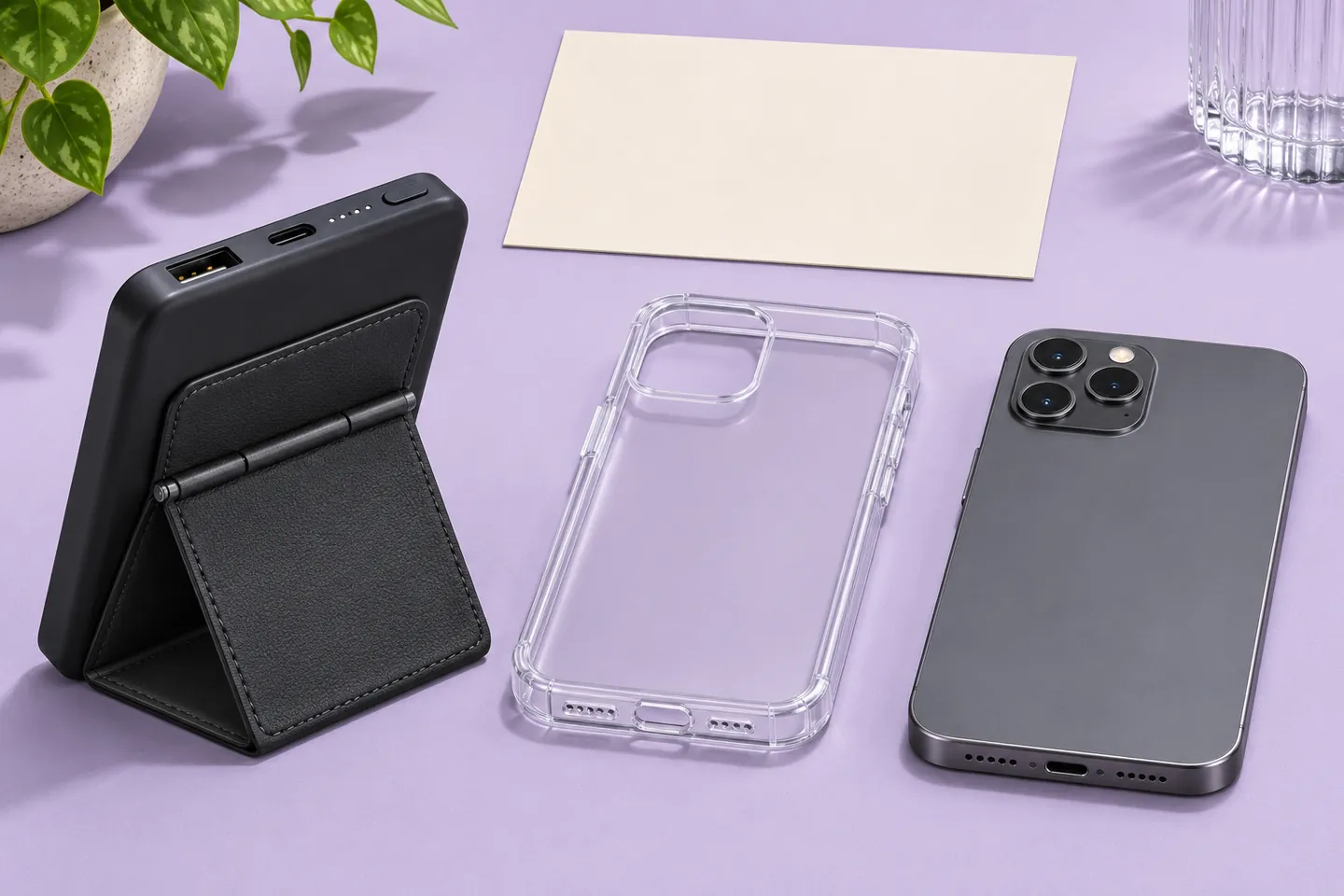
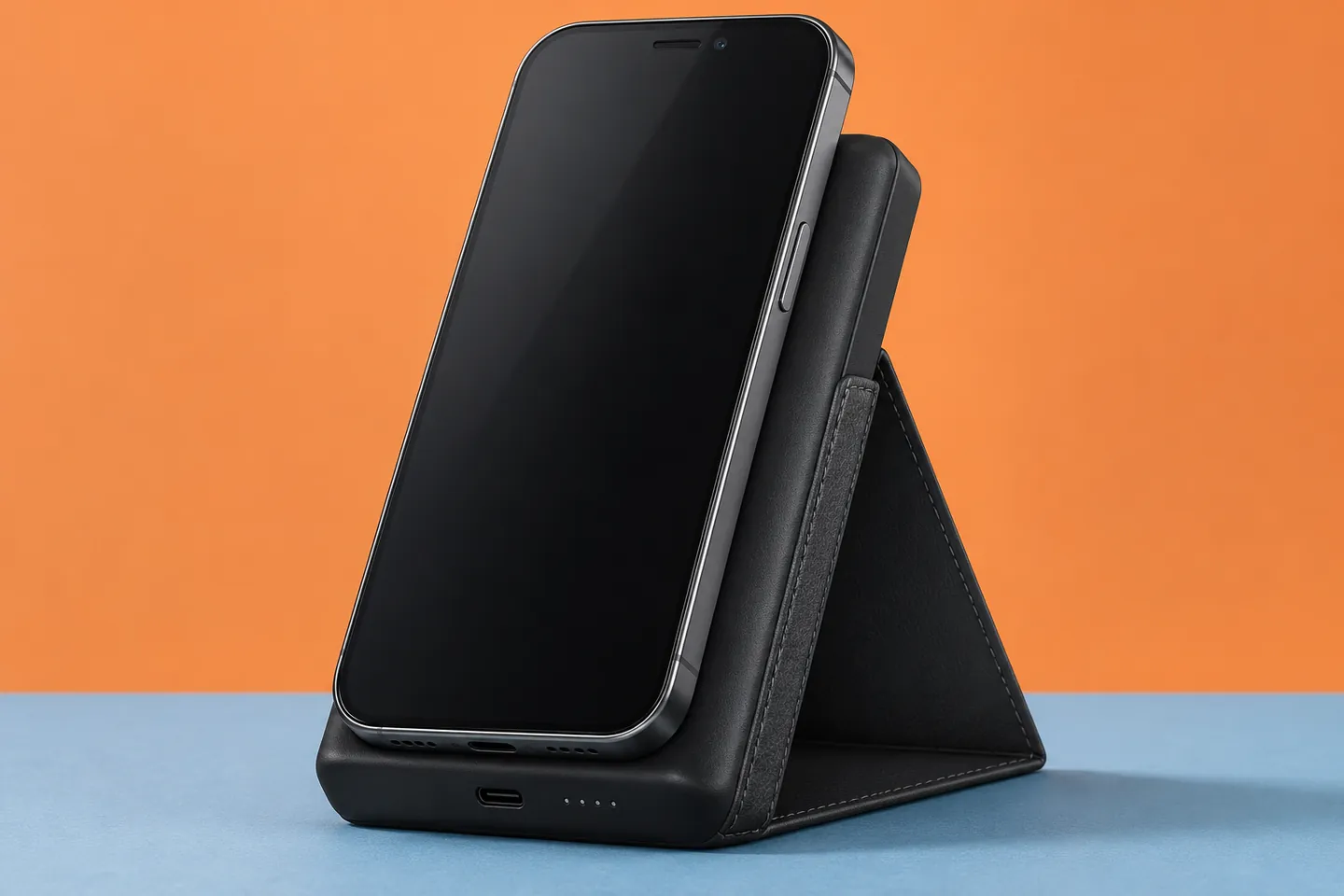
AI-generated fit-review concept; not an actual ZONNGOO sample, compatibility test or stability result.
5. Compare Stand Designs By The Intended Task
You should compare the complete use case rather than ranking stands by appearance alone. The table helps you turn a lifestyle requirement into questions for the supplier. It does not establish a mechanical specification for any product. Resolve each requirement using the actual model and instructions.
| Intended Task | Ask Before Choosing | Check With The Sample |
|---|---|---|
| Desk video calls | Supported phone position and camera access | Actual phone and case in that posture |
| Landscape media viewing | Whether landscape support is specified | Placement without forced adjustment |
| Occasional screen interaction | Permitted tabletop use | Ordinary intended interaction on the agreed surface |
| Cable charging while standing | Port position and usable cable route | Connector clearance without sideways pull |
| Compact daily carrying | Folded dimensions and closure arrangement | Packing with the intended accessories |
| Branded retail set | Exact model, instructions and supported claims | Approved configuration and current documentation |
Choose essential tasks before adding optional features. A simple supported viewing position can be more useful than an unverified promise of unlimited adjustment. If the use changes, revisit the selection. Do not carry an approval from one posture or accessory arrangement into another without checking what changed.
6. Keep Stand Function Separate From Charging Method
You should verify charging independently from the fact that a phone can be supported. A stand can hold a phone without proving wireless reception, alignment or charging progress. Confirm the bank’s listed output and the phone’s accepted method. Then evaluate the supported viewing arrangement with that connection.
Apple’s wireless charging guidance emphasizes recommended placement and notes that cases or intervening items can affect charging. Its instructions concern iPhone charging, not approval of a third-party stand. Apply the exact accessory instructions to an upright setup rather than copying a flat-pad photograph mechanically.
Do not place cards or inappropriate objects between charging surfaces. For a phone requiring a wired connection, confirm that path rather than assuming the stand enables wireless charging. Our wired-versus-wireless guide explains the broader choice. Record support, attachment and charging as separate observations, so a successful viewing demonstration does not become an unsupported charging claim.
7. Compare Folded Size And Charging Capacity Honestly
You should compare the folded product’s actual dimensions and energy information alongside the stand feature. A folding support adds a mechanical arrangement to carry and store. Do not assume a product’s photographed silhouette describes its folded thickness. Request the current specification for the exact model.
ZONNGOO’s 5PMC27 listing provides a concrete foldable PU-covered stand example in the semi-solid-state family. It lists 5,000mAh cell capacity and up to 20W USB-C output. Those are product specifications, not a guarantee of phone charging time or delivered energy. Confirm the currently supplied revision and relevant conditions before using the figures in a quotation.
Do not divide printed capacity numbers into a promised full-charge count. Our rated-capacity guide explains the distinction between cell and output descriptions. For your purchase, compare the complete carried kit and documented charging capability. A convenient stand does not remove the need to choose appropriate energy, size and connection requirements.
8. Check Ports And Cable Routing In The Standing Position
You should check connector access with the support open and the phone in its intended position. An accessible port when folded may be less convenient in a standing arrangement. Confirm that the cable can seat normally and rest without pulling the bank or phone sideways.
Choose a cable route that fits the desk and normal task. Do not use an unsupported adapter just to bypass a blocked connector. A shorter cable may reduce loose loops but restrict bank placement. Review the actual housing shape and case clearance, not only the cable color or nominal length.
Our USB-C cable selection guide helps you specify connectors and required capability. If another device shares the bank, check the documented output combination separately. Individual port maximums do not establish a simultaneous total. Likewise, do not assume bank recharging and phone output can operate together. Request explicit support for any additional mode before making it part of the stand kit.
9. Ask For Evidence Behind Mechanical And Certification Claims
You should request evidence for any advertised hinge lifetime, supported load or adjustment range. These are different claims from cell capacity or charging output. A material description does not establish a quantified durability result. A folding demonstration does not prove a lifetime of repeated use.
If a mechanical claim matters, ask what configuration and method support it. Keep the evidence attached to the relevant product revision. This article does not state that ZONNGOO has performed a particular hinge or stability test. Do not invent a cycle count or convert a cell-cycle figure into a stand-lifetime figure.
For wireless certification wording, the Wireless Power Consortium’s guidance explains checking the certificate and matching product in its database. A magnetic ring, stand or listed wireless wattage does not replace that evidence. This guide asserts no Qi, Qi2 or MagSafe certification for 5PMC27. Keep documented compatibility, marketing description and certification status distinct during review.
10. Approve The Folding And Packing Configuration
You should approve the exact product, phone, case and accessories together before describing a branded stand kit as suitable. Record the supported posture, surface and connection. Include the folded arrangement used for carrying. Agree on observations and acceptance criteria before sample review.
Our sample confirmation page provides the wider project context. These are proposed purchasing steps, not a report of inspections already completed. Ask for the current operating instructions and the evidence needed for your intended claims. Keep unresolved mechanical or charging questions visible until they are answered.
Review packaging with the support folded as instructed. Avoid a layout that forces the support into an unsupported position. Our packaging design page can help frame that discussion. Preserve the approved accessory list and revision with the order. If the case, cable or construction changes, ask how that affects the agreed arrangement. Check before reusing the approval or customer-facing imagery.
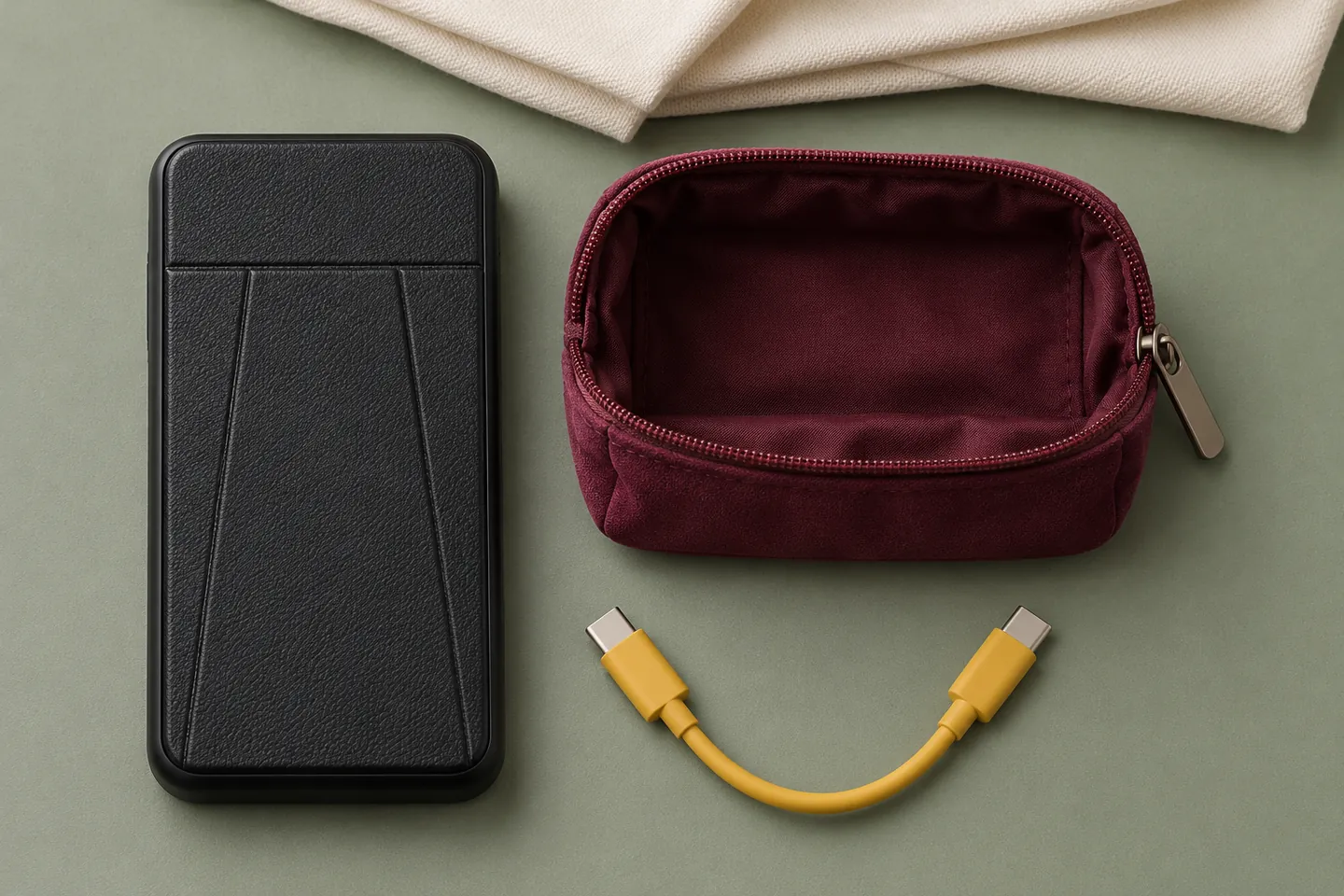
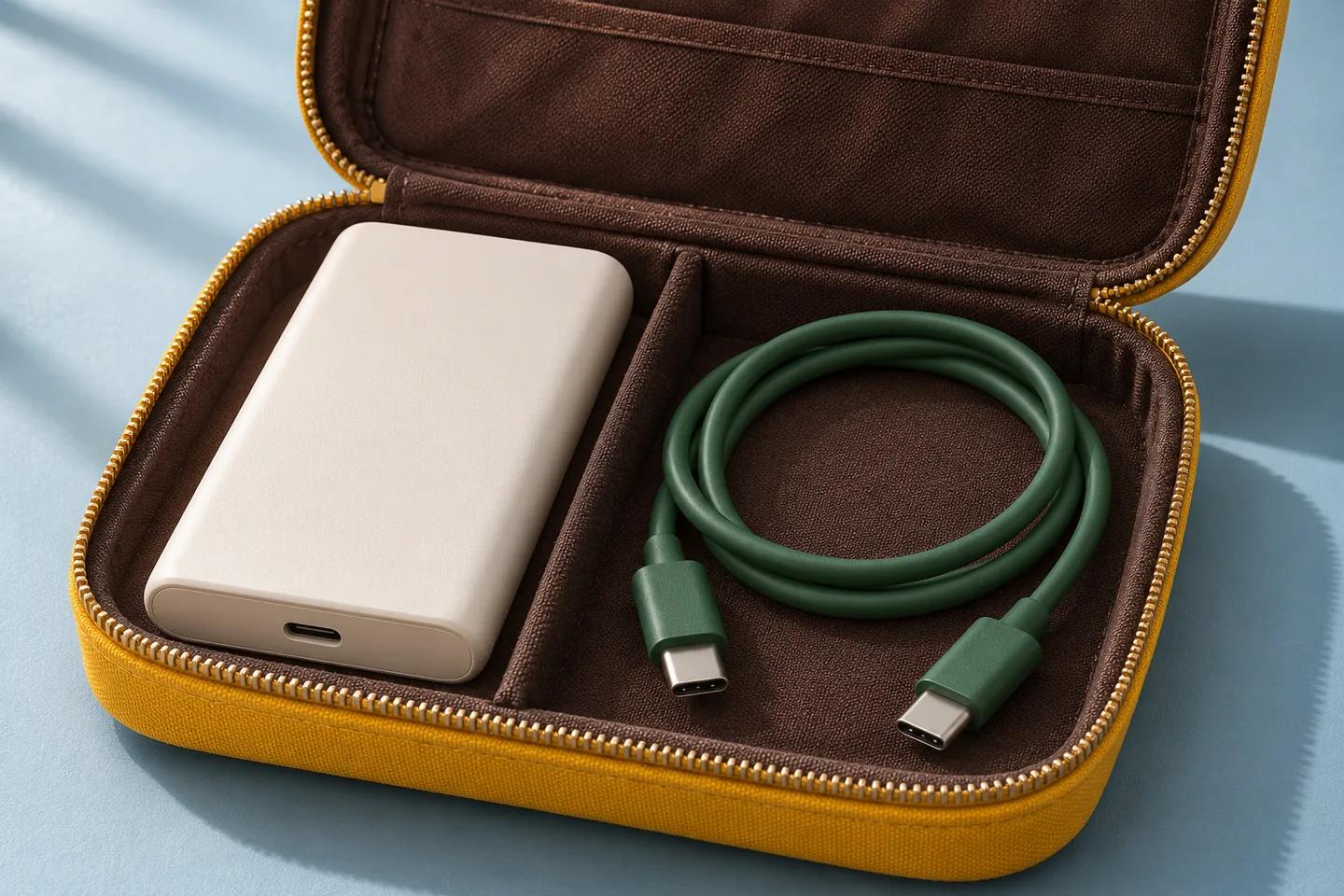
AI-generated folded-kit concept; not a real ZONNGOO package, approved sample or durability measurement.
11. Send A Stand-Focused Project Brief
You should send the phone model, case and viewing task with your inquiry rather than requesting a stand feature alone. Add the intended orientation, surface, charging method and carrying preferences. Include quantity, target market and branding needs. Separate essential requirements from optional design preferences.
ZONNGOO’s product range and OEM/ODM page provide starting points for discussing the actual offered configuration. They do not establish availability of every stand, angle, phone combination or customization. Request the exact product specification and current sample proposal. Confirm which claims are supported before approving artwork.
Then contact ZONNGOO with one brief and the decision you need to make. Ask which posture and charging arrangements the supplied model supports, and what remains unverified. Request the relevant instructions and an agreed sample review. That gives you a concrete buying decision. Avoid promises of universal fit, permanent stability, unlimited hinge life or unsupported certification.
FAQ
Does A Stand Power Bank Always Charge Wirelessly?
No. Verify the listed charging methods and the phone’s reception separately. A support feature or magnetic attachment alone does not establish wireless compatibility.
Can Every Foldable Stand Hold A Phone Horizontally?
No universal assumption is justified. Confirm landscape support in the actual product instructions. Review the exact phone and case in that posture without forcing the folding mechanism.
Does A Larger Capacity Make The Stand More Stable?
Capacity alone does not establish stability. Review construction, posture, phone, case, surface and cable arrangement. Do not infer a mechanical rating from an energy specification.
Can I Use A Tablet On A Phone Stand Power Bank?
Only if the product’s documented intended use supports that equipment. Do not expand a phone-support claim to tablets based on appearance. Request an appropriate verified configuration.
What Should I Ask About Hinge Durability?
Ask for the exact claim, relevant method, configuration and supporting record. Do not treat a cell-cycle statement as a hinge-cycle result. Keep unverified lifetime promises out of the product description.
What Should A Private-Label Stand Sample Include?
Include the bank, intended phone and case, cable, supported posture and instructions. Record the folded packing arrangement. Approve relevant claims and review changes affecting that configuration.
Conclusion
Choose a foldable-stand power bank for a defined phone setup. Verify support, orientation and charging separately, then review them together. Compare folded size and evidence honestly. Approve one documented configuration before making customer-facing promises, and reassess changes that affect its use.