Quick Answer
You can charge two devices together when the power bank explicitly supports the selected output combination. Two connectors alone prove nothing. Check the simultaneous-output table, each device’s requirements and the cables. The advertised single-port maximum may fall when another output starts. Confirm the exact combination before promising two-device fast charging.
Introduction
You want one portable battery for a phone and another device. This guide explains power sharing, practical comparisons and purchasing questions. It helps you distinguish a convenient extra connection from a combination that meets your actual charging needs.
1. Check Which Connections Work Together
You need written confirmation that your chosen ports, built-in cables or wireless output can operate together.
Start with the exact model and battery series. Count the available connections, then identify their roles. A socket might accept input, supply output or support both directions. A built-in cable can have different limits from a neighboring socket. Their appearance does not establish their function.
Ask for a connection diagram and a simultaneous-output specification. Identify combinations individually: USB-C plus USB-C, USB-C plus USB-A, or wired plus wireless. A product supporting one combination does not automatically support every combination. Three charging options shown separately are not proof that all three operate together.
Use the product categories to shortlist formats, then request the current specification for your selected reference. Keep the battery series attached to that reference. Similar model names across different series should not be treated as interchangeable. This prevents a correct answer for one version becoming an incorrect claim for another.
2. Separate Port Ratings From Shared Output
You must distinguish one port’s maximum from the power available when multiple outputs are active.
Imagine a fictional power bank whose single USB-C output supports 30W. Its two-output mode could instead specify 15W shared. These are illustrative numbers, not ZONNGOO specifications. You cannot add two separate 30W headlines and assume 60W combined. Nor can you assume a shared budget divides equally.
Read each table heading carefully. “Total output,” “single output” and a listed combination describe different conditions. Voltage and current also matter. An output mode listed for one port might disappear when another connection becomes active. Ask which profiles remain available in the simultaneous mode.
Write down the result in plain language: which connection, which other connection and what combined limits apply. Keep maximum capability separate from the power your devices actually request. A clear combination table is more useful than several large numbers printed beside connector photographs. Missing information is a question to resolve, not permission to invent a favorable allocation.
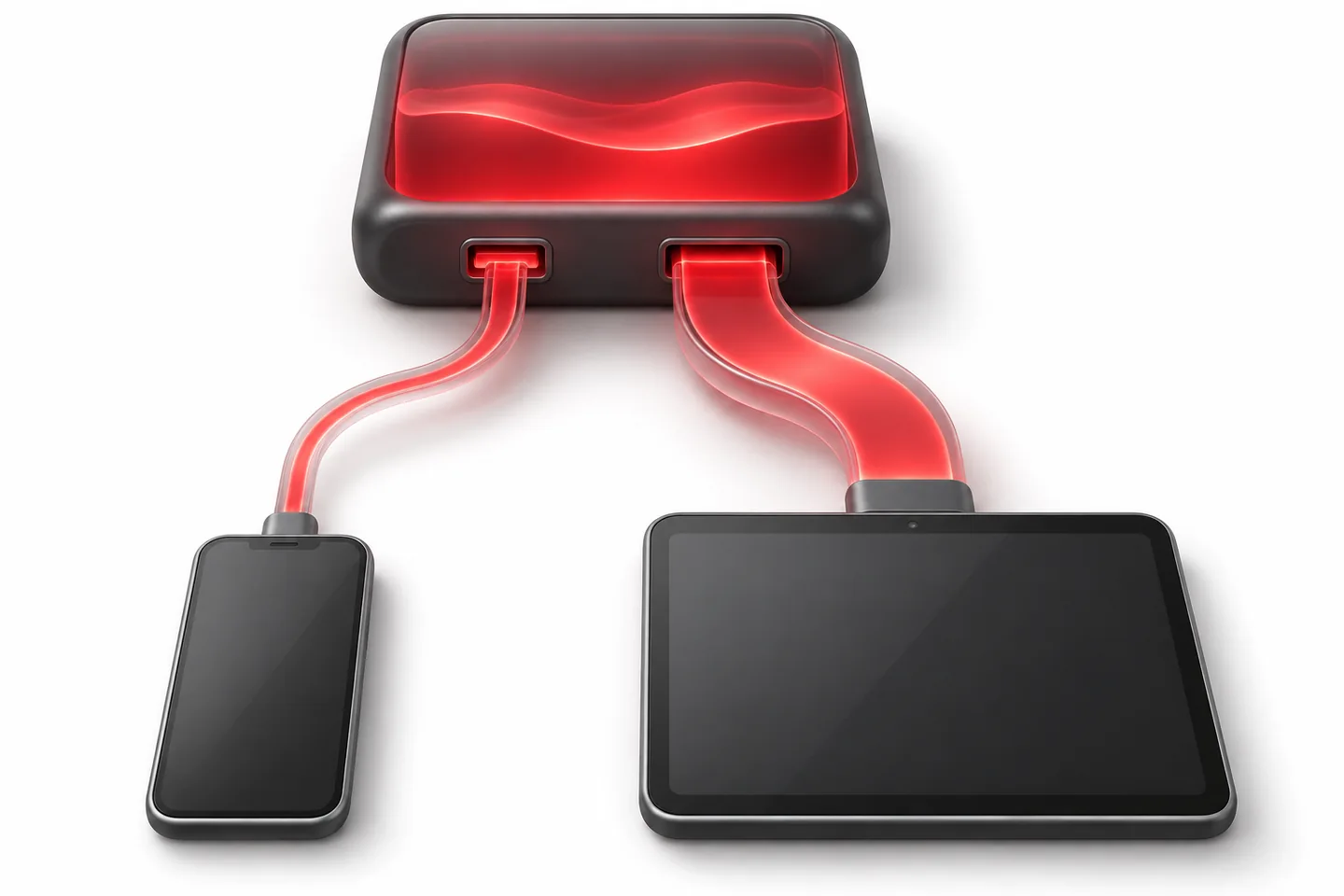
AI-generated conceptual illustration of allocation; channel widths do not represent measured power, efficiency or a particular circuit.
3. Match The Combination To Your Devices
You should judge shared output against both devices’ requirements and your priority device’s needs.
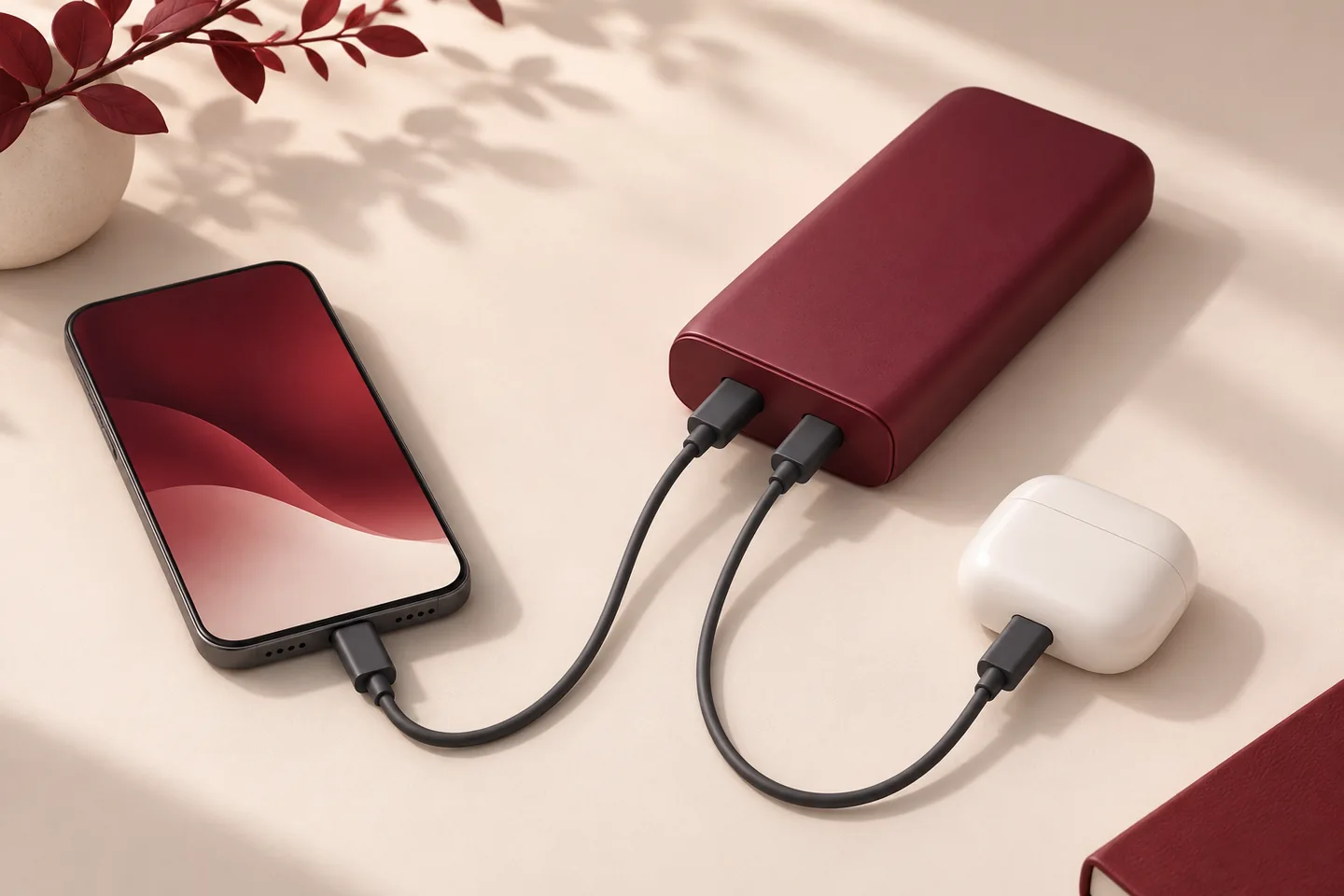
Write a short device list before comparing products. Include the exact phone, tablet or accessory and the charging connection you intend to use. “Two devices” describes a count, not a workload. A phone with an earbuds case can create a different requirement from two tablets.
Decide whether your priority is rapid phone recovery, steady background charging or simply fewer accessories. If one device needs the stronger mode, ask which port receives it with the other connected. Do not assume the first cable inserted receives permanent priority. Follow the documented allocation behavior.
A supported combination can still be unsuitable for your intended experience. Two devices showing charging icons do not prove either meets your required rate. For broader single-device selection, use the USB-C power selection guide. Then return to the simultaneous table. Single-port suitability is only your starting point when you intend to share the output.
4. Understand Negotiation And Reallocation
You should expect charging behavior to depend on the connected devices and the product’s documented power-management design.
USB-IF’s Power Delivery overview describes flexible power management according to device requirements. A USB-C connector alone does not establish which Power Delivery modes a particular power bank implements. Request the supported profiles for your combination rather than borrowing the standard’s highest possible headline.
Ask what happens when you connect or disconnect the second device. Depending on the design, the product may redistribute power or renegotiate a charging mode. A brief interruption can matter for an accessory that restarts when supply drops. Do not advertise uninterrupted operation without evidence for the exact setup.
Include connection order in your evaluation. Check device A alone, add device B, then remove B. Repeat with the order reversed. Record the observed behavior without assuming one result explains the internal circuit. If continuity matters, state that requirement before choosing the sample. A portable charging accessory should not be repurposed as an uninterrupted supply merely because it has two outputs.
5. Compare Useful Device Pairings
You can compare candidates more clearly by testing the same practical device pair on each product.
Use the table below to define questions, not as a universal compatibility promise. A particular product may support fewer combinations. Device behavior, accessory requirements and the manufacturer’s instructions remain decisive.
| Intended Pair | Main Question | Evidence To Request |
|---|---|---|
| Phone and earbuds case | Does the case continue charging at low demand? | Supported mode and completion behavior |
| Two phones | What happens to each phone’s charging mode? | Exact simultaneous-output table |
| Phone and tablet | Does the priority device receive sufficient power? | Per-port profiles with both connected |
| Wireless phone and wired accessory | Can those outputs run together? | Written wired-plus-wireless limits |
| Device plus power-bank recharge | Is pass-through explicitly supported? | Separate input-and-output instructions |
Choose one representative pair for your first comparison, then add the important exceptions. This avoids an unmanageable device list while exposing your main purchasing risk. For a retail bundle, evaluate the accessories you actually plan to supply. A successful comparison using different cables does not validate the packaged combination.
6. Include Cables And Low-Power Accessories
You need suitable cables and documented support for accessories that draw very little power.
Check connector type, intended direction, condition and the rating required by the supported mode. A familiar plug shape does not confirm the complete charging setup. Keep the cable used during evaluation with the corresponding record. Replacing it later can make comparisons less useful.
Small accessories deserve their own observation. Ask whether the power bank provides a suitable low-current mode and how that mode operates. Do not assume every product keeps an output active for every small load. Check whether the earbuds case finishes charging and what happens after completion. Use the normal instructions rather than improvised electrical loads.
If convenience drives your choice, compare a built-in cable format with separate cables. An integrated lead reduces one item to carry, but it does not remove shared-output limits. Check reach, connector clearance and handling with both devices connected. The physical arrangement should support the promised everyday use as well as the electrical specification.
7. Separate Wired, Wireless And Pass-Through Modes
You must verify wired-plus-wireless charging and pass-through separately from ordinary two-port output.
Wireless charging introduces its own device and positioning conditions. Magnetic attachment alone does not establish Qi2 certification or Apple authorization. Request any relevant certification for the exact model before using those descriptions. Do not treat a magnetic ring as evidence of a particular wireless charging rate.
Pass-through means the power bank receives input while supplying another device. That is different from powering two devices from its stored energy. Ask whether pass-through is allowed, which connections apply and what limits change. Do not assume input simply adds to the output budget. Follow the instructions for the specific product.
Keep your marketing scenes consistent with these distinctions. A photograph showing a wall adapter and two devices can imply a mode never confirmed in the documentation. If that arrangement matters, include it explicitly in your inquiry. The power-bank recharge guide explains the input side. Combine its questions with a separate output-combination request rather than merging unrelated maximum ratings.
8. Interpret Slow Charging Without Guessing
You should investigate shared limits, device state and charging conditions before calling slower charging a defect.
Apple notes that multiport charging can reduce available power. That guidance illustrates why the complete setup matters. It does not establish the allocation or compatibility of a ZONNGOO model. Read the selected product’s table alongside the receiving device’s instructions.
Compare one connected device with the same device in your two-output arrangement. Keep its starting condition and use reasonably consistent. A bright active screen or ongoing work changes the practical experience. A battery already near completion can behave differently from one needing substantial energy. Charging icons alone do not separate these effects.
Use the manufacturer’s temperature and operating guidance. Do not block ventilation or force operation outside stated conditions to chase a higher number. If the behavior differs from the confirmed specification, record the model, connections, accessories and observed sequence. A useful support request describes the discrepancy. It does not infer a failed component or an unsafe design from a single slow session.
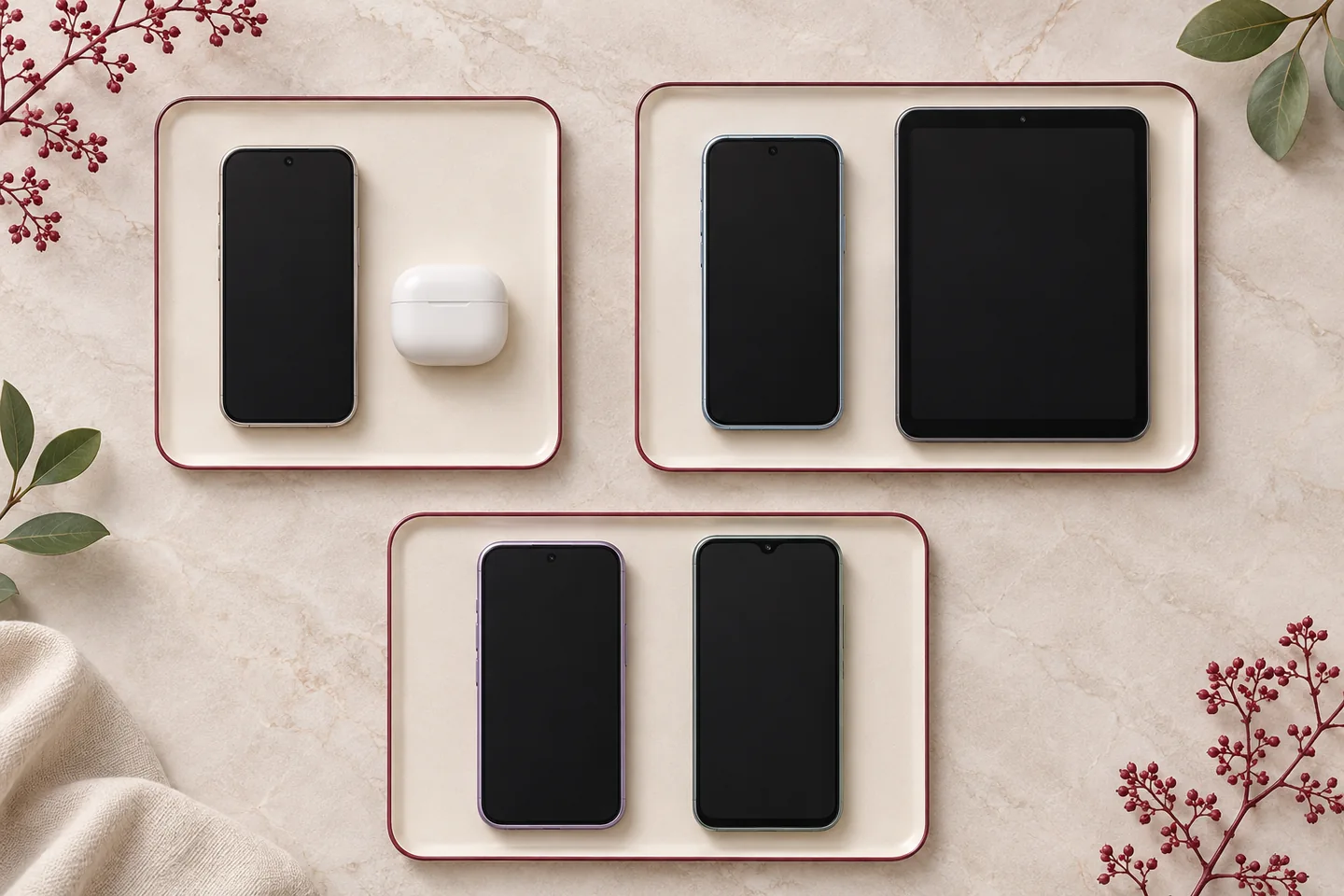
AI-generated device-pair planning concept; not a compatibility test, customer installation or endorsement of a particular product.
9. Plan Energy And Portability Together
You need enough stored energy for your combined task as well as suitable simultaneous output.
Power describes the delivery rate; energy describes the amount available. Two usable outputs do not double the battery’s stored energy. Conversely, a larger capacity label does not establish a stronger shared-output mode. Treat these as separate purchasing decisions.
Describe the actual task: topping up two phones during a journey differs from supporting a tablet through a long session. Ask for documented energy information and applicable output conditions. Avoid promising a fixed number of full charges from the mAh headline alone. Device energy needs and conversion behavior also affect the result.
Consider the complete carrying arrangement. Two cables, a larger housing and awkward device placement can undermine an otherwise attractive specification. Check whether your chosen combination remains comfortable on a table or in the intended setting. Do not bend connectors sharply or cover charging equipment inside an unsuitable enclosed space. Follow the product’s operating instructions when choosing where to charge.
10. Review A Sample With A Repeatable Checklist
You can make a better purchasing decision by recording the same defined sequence for each candidate sample.
Record the complete product reference, document revision, device models, cables and starting indications. Note the selected connections and whether the power bank is receiving input. Separate observations from conclusions. “Device stopped charging after connection B” is more useful than an unsupported diagnosis.
Check each device alone, both together and each connection order. Observe whether the priority device still meets your agreed need. Include low-power completion behavior when relevant. Record any interruption when adding or removing a device. Do not bypass protection or open the battery to investigate behavior.
If numerical power measurements are required, agree the method, instruments and acceptance criteria with a qualified party. An inline meter may affect negotiation or omit internal behavior. A displayed wattage also needs an explained measurement boundary. Use the sample confirmation service to discuss your requirements. This checklist is a proposed review plan, not a claim that ZONNGOO has already performed these evaluations.
11. Turn The Results Into A Clear Buying Brief
You should request a confirmed device combination and usage claim instead of asking only for more ports.
Send the selected product family, destination market, quantity and device pair. State the priority device and whether simultaneous fast charging is essential. List cables, wireless use, pass-through needs and any interruption constraints. Ask for the current combination table and unresolved questions in writing.
ZONNGOO presents power-bank categories, OEM/ODM options and customization services on this website. Availability, electrical configuration and supporting documents require confirmation for your selected model. This article does not extend any model’s output rating or certify an unverified combination.
For a branded order, transfer the confirmed limits into the manual and packaging brief. “Two devices at once” and “two devices fast charging” are different promises. Keep accessory assumptions visible and ensure artwork matches the approved configuration. Use one inquiry containing the full requirement set. Clear conditions help the supplier answer the intended use rather than a vague headline.
Frequently Asked Questions
Can Every Two-Port Power Bank Charge Two Devices Together?
No. You need confirmation for the selected combination and connection roles. One port may be input-only, or simultaneous operation may have different limits. Check the exact model’s instructions. Counting sockets does not establish two-device support or the available power for either device.
Does A 30W Port Mean Two Devices Receive 30W Each?
No. A single-port maximum does not establish the combined budget. Read the simultaneous-output table and each port’s available profiles. Any numbers in this guide are hypothetical examples. Ask for documented allocation rather than multiplying a headline by the number of connections.
Why Does My Phone Slow Down When I Add Another Device?
The power bank may share its output or change available charging modes. Your phone’s state and the accessories can also affect behavior. Compare the documented combination and a controlled single-device session. Record the difference before assuming a fault or promising an automatic solution.
Can I Recharge The Power Bank While Charging Two Devices?
Only use that arrangement when the manufacturer explicitly supports it. Pass-through is a separate operating mode with its own connection and power conditions. Two-output support alone does not authorize simultaneous input. Request written instructions for the exact arrangement you intend to use.
Can A Phone And Earbuds Case Share One Power Bank?
They can when the product supports those connections and the accessory’s charging behavior. Check any low-current mode, continued charging and completion. A small load does not guarantee universal compatibility. Evaluate the actual case and cable rather than treating every accessory as equivalent.
What Should A Brand Ask Before Advertising Dual Charging?
Request the approved combination, per-port profiles, total output and applicable accessory conditions. Clarify connection interruptions, wireless behavior and pass-through separately. Match claims to the current model and documentation. Keep unresolved details out of packaging until the supplier confirms the intended configuration.
Conclusion
You can choose two-device charging confidently when the combination, shared limits and device needs align. Verify cables, special modes and connection behavior before approving claims. Send ZONNGOO your exact device pair and intended use to discuss a suitable configuration and the documents needed for review.