Quick Answer
Choose a power bank for camping by your device list, time away from outlets and lighting needs. Compare usable energy, supported outputs, carrying weight and documented operating conditions. A built-in light can simplify campsite tasks, but it shares the battery’s energy. It does not automatically replace a headlamp or prove weather resistance.
Introduction
You need a power bank for camping that fits the trip, rather than the largest capacity headline. This guide connects phone charging, evening lighting and practical carrying decisions. You will also learn what to confirm before selecting an outdoor-lighting model or approving a branded order.
1. Define The Trip Before Choosing Capacity
You should describe the trip’s actual charging and lighting tasks before comparing products.
Start with the number of people, nights and devices. A campsite beside your vehicle creates different priorities from a walk-in trip. List when an outlet will next be available. Do not describe a weekend simply as two days if the battery must also cover departure and return travel.
Separate essential functions from convenience. You might prioritize communication, navigation-device charging or a short reading session. A decorative light is a different requirement from finding your way with both hands free. Decide which tasks need independent equipment rather than forcing every role onto one battery.
Write a short usage brief: devices, expected charging opportunities, lighting sessions and carrying constraints. You can then compare the product categories against a defined need. This is more useful than assuming every product labeled outdoor suits every campsite. Location, equipment and your normal operating instructions still determine whether a configuration is appropriate.
2. Compare Energy On A Clear Basis
You need a common energy basis before comparing a capacity label with your planned consumption.
Milliamp-hours require a voltage basis to describe energy. Cell capacity and rated output capacity can use different reference conditions. Read both definitions and ask for documented watt-hours or the information needed to interpret them. Do not multiply a cell-capacity headline by a USB voltage to invent available output energy.
The U.S. Energy Information Administration explains that watt-hours describe energy used over time. That distinction helps separate a device’s power from its overall trip requirement. A high power rating describes delivery capability, not the number of nights you can run a light.
Ask whether the quoted energy concerns stored energy or energy delivered through a specified output. Keep conditions attached to the figure. Conversion and system consumption matter when crossing measurement boundaries. For a broader capacity comparison, see the 5,000mAh versus 10,000mAh guide. A larger number alone cannot settle your camping requirement.
3. Allocate A Budget For Charging And Lighting
You should reserve energy for both connected devices and the integrated light instead of counting the battery twice.
Create separate entries for each task. Record the intended duration and the relevant energy estimate or measurement. For an integrated light, ask about the complete lighting system’s consumption at the selected setting. The bare LED component’s rating may omit other consumption. Do not treat an unverified brightness label as an electrical power value.
For an arithmetic example, allocate a fictional 8Wh to lighting and 15Wh to device charging. Their sum is 23Wh before any reserve. This is a planning illustration, not a ZONNGOO runtime claim. Both allocations must refer to the same energy boundary before addition. Otherwise, obtain the appropriate conversion information first.
Add reserve according to your own trip uncertainty rather than a universal percentage invented here. A longer evening or changed phone usage can alter the plan. Do not advertise a fixed multi-night runtime from this example. Ask for evidence covering the actual setting and usage sequence.
4. Check The Ports Your Devices Need
You should match each device to a confirmed output mode and check any simultaneous-use limits.
List the actual phone, camera or other accessory and its cable. A connector fitting physically does not establish the charging mode you expect. Read the product’s supported profiles and the receiving device’s requirements together. Keep integrated cables and separate sockets distinct when their specifications differ.
If you plan to charge two devices, request the exact combination table. Also ask whether lighting changes available charging behavior. Do not assume a maximum printed for one port remains available with every other function active. A light and two occupied sockets create a specific configuration to verify.
Use the shared-output guide to prepare those questions. Include any small accessory whose charging behavior matters. Check connector clearance and cable reach on a table, not just the specification. A useful camping setup must remain manageable when you place devices and lighting together in the intended sheltered location.
5. Choose Lighting For The Task
You should assess the light’s purpose, settings and placement rather than judging it by an attractive nighttime photograph.
A broad campsite light can help with nearby tasks. A headlamp serves a different hands-free role. The National Park Service includes headlamps among outdoor lighting essentials. Keep an appropriate separate light in your plan instead of treating a charging accessory as your only solution.
Ask about brightness settings, activation and the intended light distribution. For reading, check your normal viewing distance and reflections on the page. For a shared table, consider whether the placement directs light into someone’s eyes. A carrying handle does not automatically authorize hanging the product in any orientation.
Treat RGB or decorative colors as a distinct feature. They do not establish useful white-light brightness, measured output or emergency-signaling capability. Request the relevant information before making those claims. A concept image can illustrate a task, but it cannot demonstrate actual beam performance or a guaranteed lighting duration.
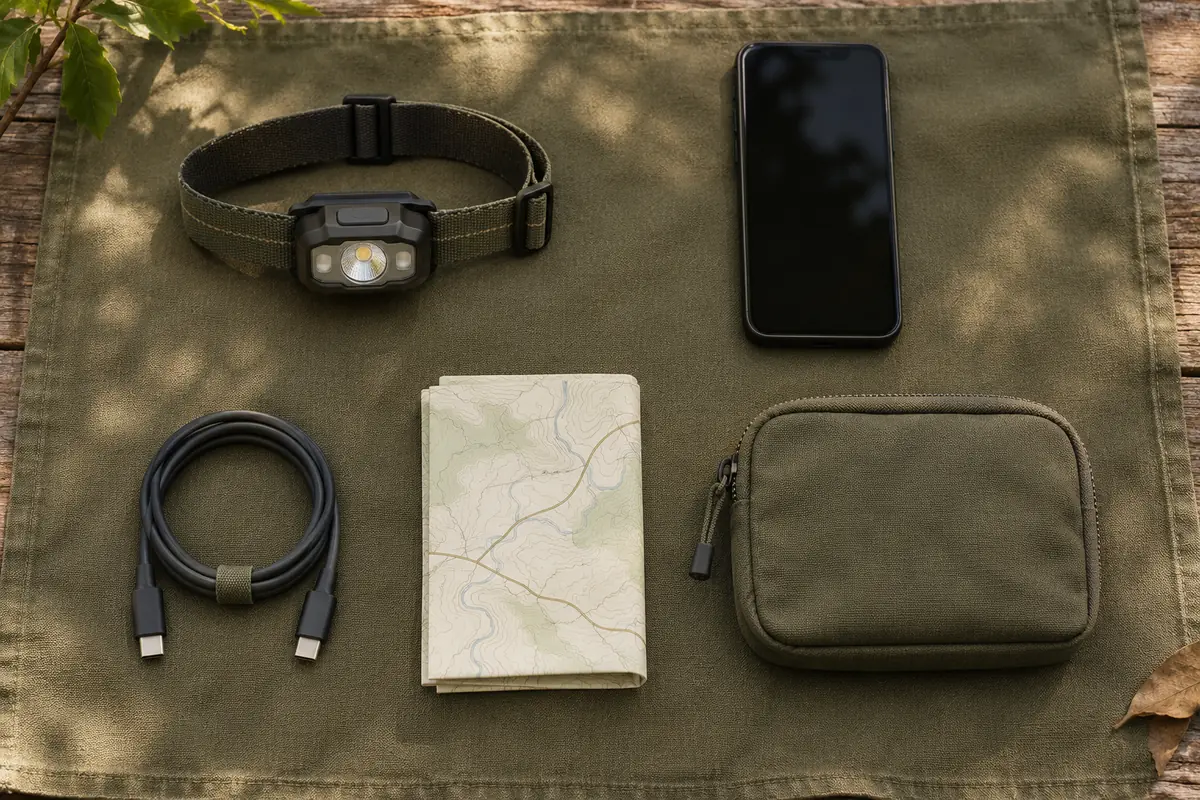
AI-generated packing concept; not a real customer kit, equipment endorsement or proof of any product’s outdoor performance.
6. Verify Weather And Temperature Conditions Separately
You should request documented conditions instead of interpreting an outdoor product name as permission for rain or extreme temperatures.
Ask whether the selected model has a stated ingress-protection rating and supporting documentation. Check the exact configuration, including any port-cover conditions. A silicone component, handle or rugged-looking housing is not evidence of a particular rating. Do not create an immersion or rain demonstration yourself to settle missing information.
Distinguish storage, discharge and charging temperature limits. A temperature printed without its operating mode is incomplete purchasing information. Do not turn a low-temperature reference into permission to charge in those conditions. Ask for the applicable report and instructions before setting an outdoor operating claim.
Plan a dry, stable operating location that follows the product’s instructions. Avoid covering operating equipment with wet fabric or enclosing it in an unsuitable sealed space. If the trip’s conditions exceed what the supplier confirms, choose another setup. The charging plan should fit the environment, rather than relying on an unverified durability assumption.
7. Plan Recharging Before The Next Evening
You should confirm how the power bank will be recharged between uses and what accessories that requires.
Read input separately from output. A product’s strongest output number is not automatically its input limit. Check the adapter, cable and supported input profiles. The recharge-time guide explains why dividing a headline capacity by output wattage does not predict refill time.
Decide whether the trip includes a reliable outlet or another explicitly compatible input source. Do not assume an arbitrary solar panel or vehicle socket supports the required mode. A useful recharge plan includes the actual source and its relevant specifications. Keep uncertain weather-dependent replenishment separate from confirmed stored energy.
Ask about charging while the light or another output is operating. That combination requires explicit instructions, not an assumption about pass-through. You may find sequential charging simpler for your scenario. Define the arrangement so the supplier addresses your intended use. A single-function maximum answers a different question.
8. Compare Weight, Size And Physical Handling
You should compare the complete carrying setup, including cables and separate lighting, rather than battery weight alone.
Higher capacity can come with a larger or heavier format. Decide whether that tradeoff fits your route and carrying method. A vehicle-based campsite may tolerate a format you would not choose for a long walk. Do not describe the same product as ideal for every outdoor activity.
Review how the handle moves, where cables exit and how the product rests on a stable surface. Keep connectors away from unnecessary strain. Check whether the lighting controls are easy to identify during normal use. Examine the actual sample rather than inferring comfort from a product rendering.
Include the accessories you will really carry. One combined product can reduce separate items, yet independent lighting can preserve flexibility. Compare both arrangements against your task list. The right decision depends on the whole kit, not a single feature. Keep any transport restrictions relevant to your journey as a separate check with the responsible operator.
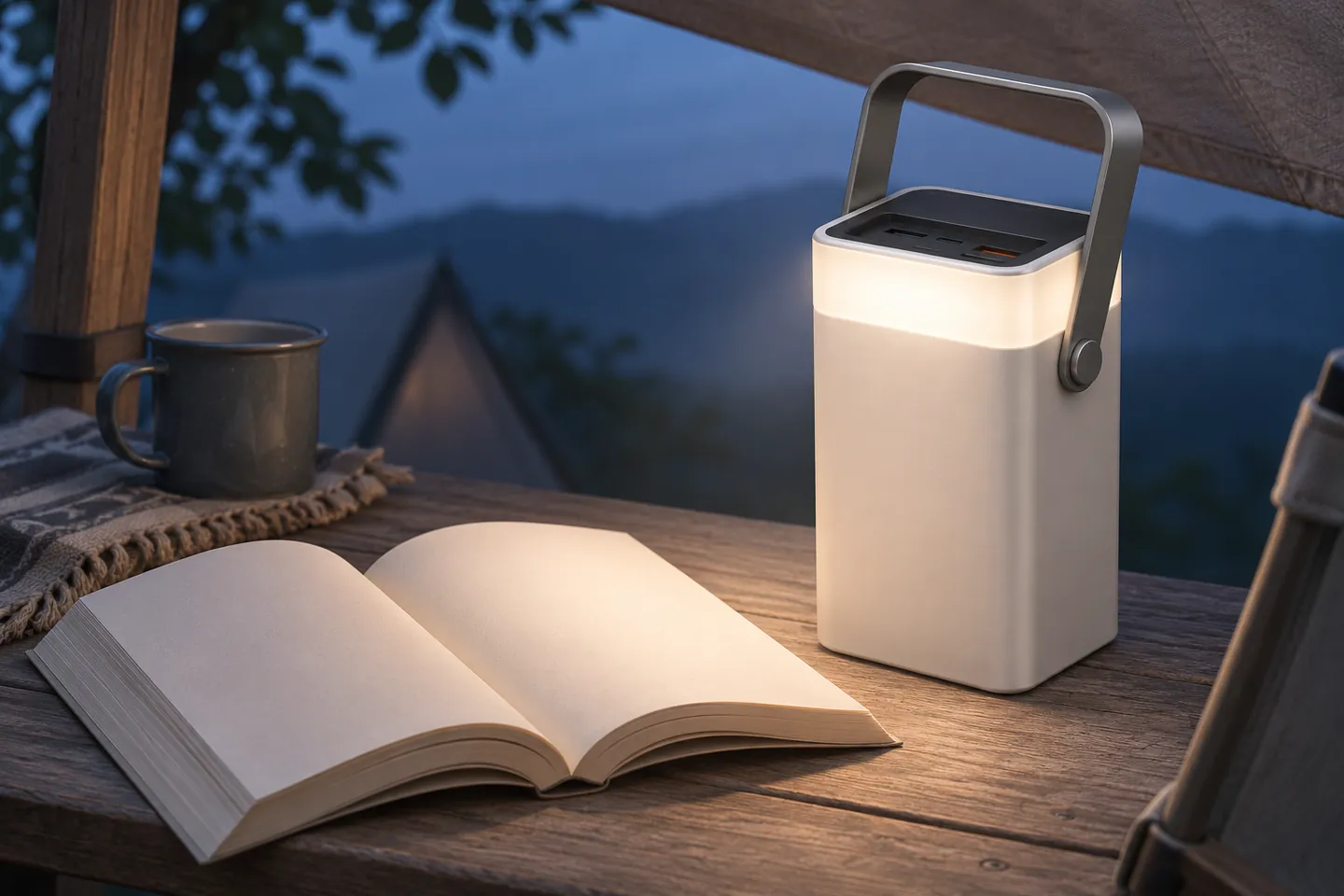
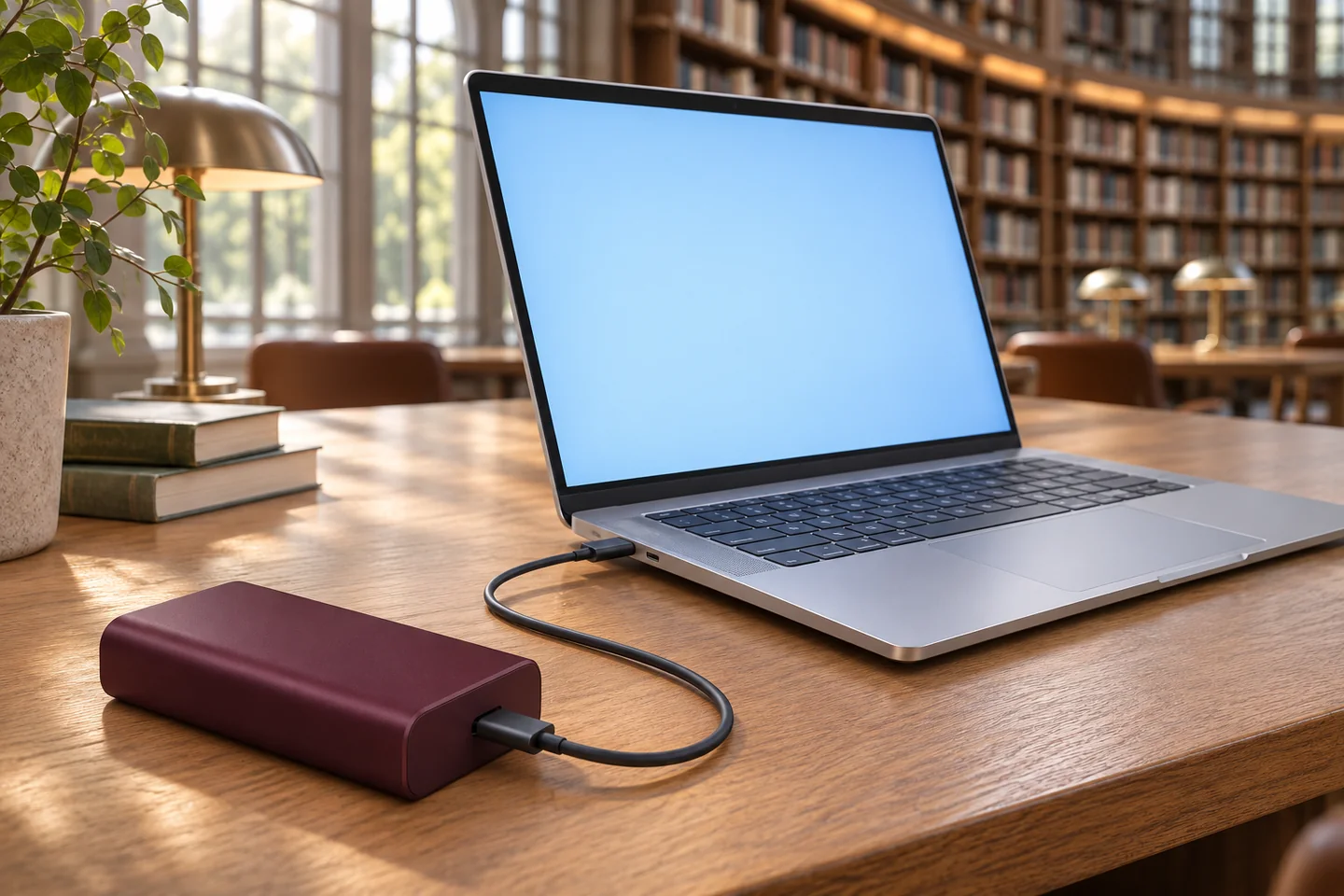
AI-generated reading-task concept inspired by the 4C31 appearance; not an exact product photograph, brightness test or runtime evidence.
9. Read An Outdoor-Lighting Product Example Carefully
You should treat a product listing as a starting point for confirmation, especially when availability or operating details remain conditional.
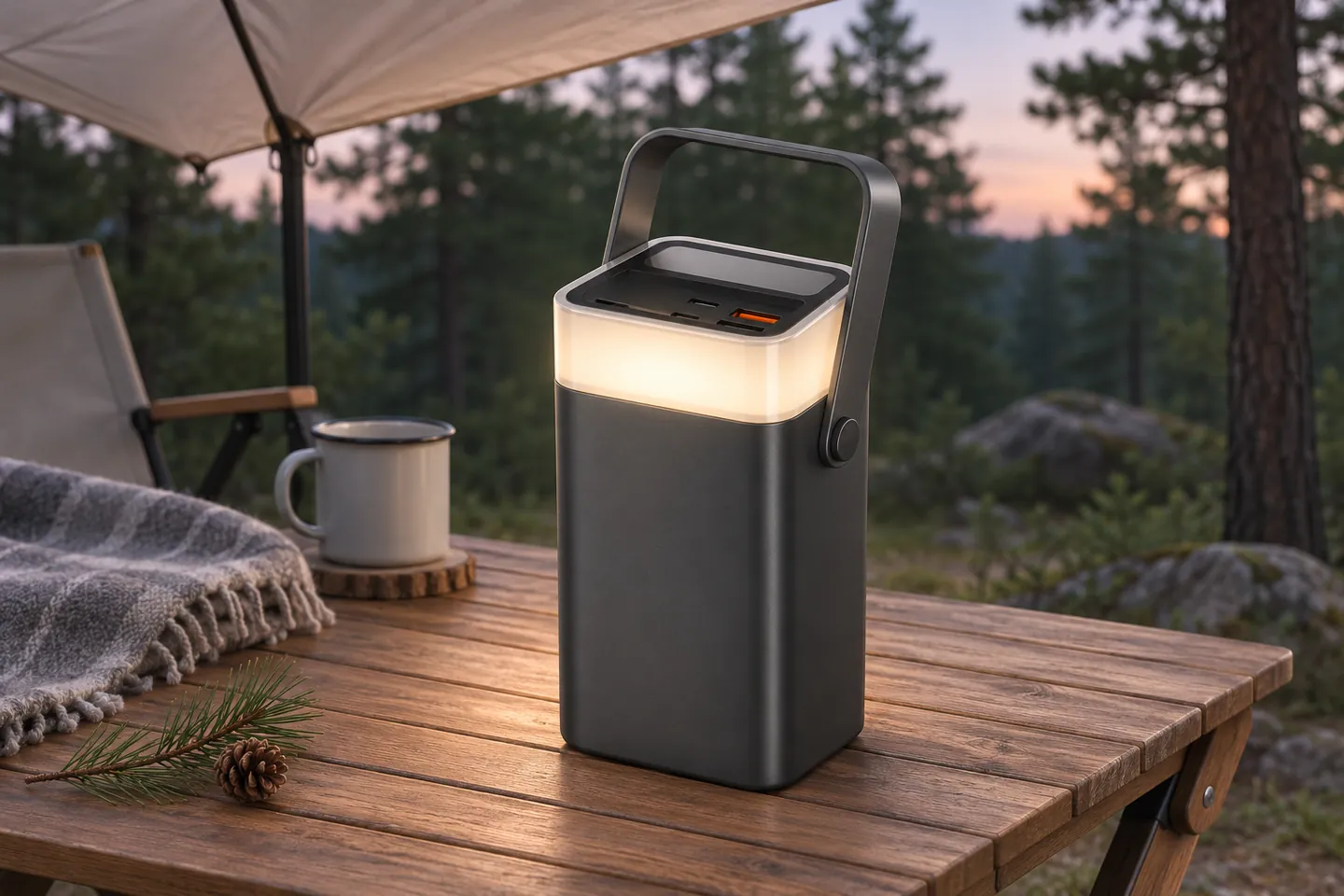
The lithium-polymer 4C31 page lists a handle, dimmable white LEDs and nine-color RGB lighting. Its cell capacity is 40,000mAh, with rated output capacity listed separately at 24,600mAh. These figures need their voltage and test conditions before an energy comparison.
The page lists up to 20W USB-C output, 22.5W on USB-A1 and 10W on USB-A2. Those are listed individual outputs, not proof of a combined camping mode. Ask what happens when lighting and your chosen connections operate together. Do not infer a universal charging speed for every phone.
The supplied sheet lists a December 2026 launch. This article is dated November 12, 2026, so ask about current sample and supply availability. Its −40°C reference also needs application-specific clarification. Neither a future launch entry nor an unspecified temperature reference justifies a ready-stock or extreme-weather promise.
10. Review A Sample Against A Practical Checklist
You should compare candidates with the same defined tasks and keep observations separate from verified performance measurements.
Use the checklist to make your sample discussion specific. It proposes a review process; it does not claim ZONNGOO has already performed the tests. Do not open the battery, bypass protection or improvise environmental testing.
| Camping Requirement | What To Review | What To Request |
|---|---|---|
| Phone charging | Exact device, cable and selected port | Applicable output profile |
| Evening lighting | Setting, placement and task visibility | Documented light information and runtime conditions |
| Shared use | Lighting plus the actual device combination | Written operating and output limits |
| Carrying | Complete kit, handle and resting position | Current dimensions and weight |
| Environment | Intended dry-use location and expected conditions | Applicable instructions and supporting reports |
| Next-day recharge | Actual input source and accessories | Input profiles and recharge conditions |
For numerical claims, agree the method, measurement boundary and acceptance criteria before evaluation. Record the complete model, series, document revision and sample identifier. Use sample confirmation to discuss the required evidence. A photograph of a lit product does not substitute for a documented runtime assessment.
11. Prepare A Clear Camping Product Inquiry
You should send the trip scenario and required functions so the supplier can assess a suitable configuration.
Include your market, quantity, devices, time away from outlets and carrying constraints. State whether the light is task lighting or a decorative preference. List your intended brightness setting, charging arrangement and environmental requirements. Separate essential functions from optional features.
For a branded order, transfer confirmed conditions into the packaging brief. Avoid unverified waterproof, runtime, emergency-signaling or cold-charging claims. Distinguish a concept illustration from actual product evidence. Ask for current availability before announcing a delivery date or promoting an upcoming model as ready to ship.
ZONNGOO presents product categories and OEM/ODM options on this website. Configuration, availability and supporting documents require confirmation for the selected model. Send one complete requirement set through the article’s inquiry link. Clear conditions help both everyday users and purchasing teams make a useful decision without inventing performance guarantees.
Frequently Asked Questions
You should resolve these common selection questions against the exact product and trip conditions.
Is A Larger Power Bank Always Better For Camping?
No. You also need suitable outputs, manageable weight and enough verified energy for the tasks. Extra capacity can add bulk without resolving compatibility or lighting needs. Compare the complete kit and recharge opportunities rather than selecting only the largest mAh number.
Does The Built-In Light Reduce Energy Available For My Phone?
The light uses the product’s stored energy, so include it in the shared budget. Ask for consumption or runtime information at your intended setting. Do not count the battery separately for lighting and charging, or calculate actual nights from an unsupported estimate.
Can A Lighting Power Bank Replace My Headlamp?
Not automatically. A table light and hands-free route lighting serve different tasks. Keep appropriate independent lighting in your plan. Confirm placement and handling instructions. A handle does not establish suitability for every hanging position or activity.
Does An Outdoor Label Mean Waterproof?
No. Request the exact rating, applicable configuration and supporting documentation. Appearance and materials alone do not prove water resistance. Follow the stated use conditions and choose a suitable setup when the expected environment exceeds what the manufacturer confirms.
Can I Charge The Power Bank In Very Cold Conditions?
Only use the charging conditions explicitly allowed by the manufacturer. Storage or discharge references do not establish charging limits. Ask for the exact mode, duration and supporting report. Do not convert an unexplained low-temperature headline into a charging instruction.
What Should I Ask Before Ordering An Outdoor-Lighting Model?
Send devices, lighting task, time away from outlets, input source and carrying requirements. Request shared-use limits, energy basis, runtime conditions and current availability. For private label, make the manual and packaging reflect confirmed information rather than attractive but unverified outdoor claims.
Conclusion
Choose a power bank for camping around your charging, lighting and carrying tasks. Confirm energy, shared-use conditions and environmental limits separately. Keep independent lighting where the trip requires it. Send ZONNGOO your scenario and device list to discuss the appropriate model and evidence before ordering.